
A timeline of the iran war
The 2026 Iran war, a timeline of the conflict
MACRONEWSGEOPOLITICAL
Rafael CARRARA
4/18/202613 min read
Although other dates could have been chosen to represent the start of the history of the conflict such as 1953 with the US-backed coup and reinstallation of the shah, Here is a timeline since 1979 to 2026 of how the conflict came to be :
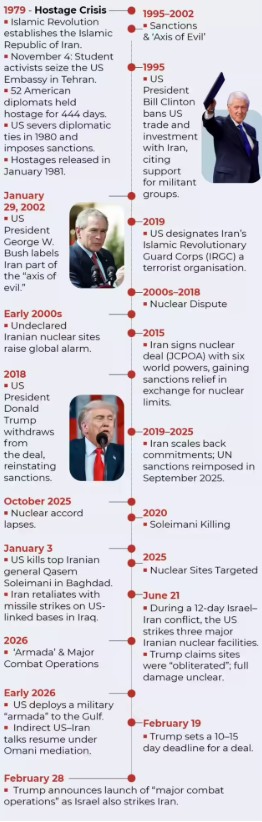
The Iran War — How It Started and How It's Being Fought
Background: The Collapse of Iranian Power (2021–2025)
At its peak in 2021, Iran was the dominant force in the Middle East. It had Russian weapons, Chinese trade, relatively free oil exports, an advanced nuclear programme, and a powerful network of proxy forces : Hamas in Gaza, Hezbollah in Lebanon, the Assad regime in Syria, and the Houthis in Yemen. Forming the so-called "Shia Crescent." This network gave Tehran control over the Strait of Hormuz, strangled Saudi Arabia, and kept Israel permanently on the defensive.
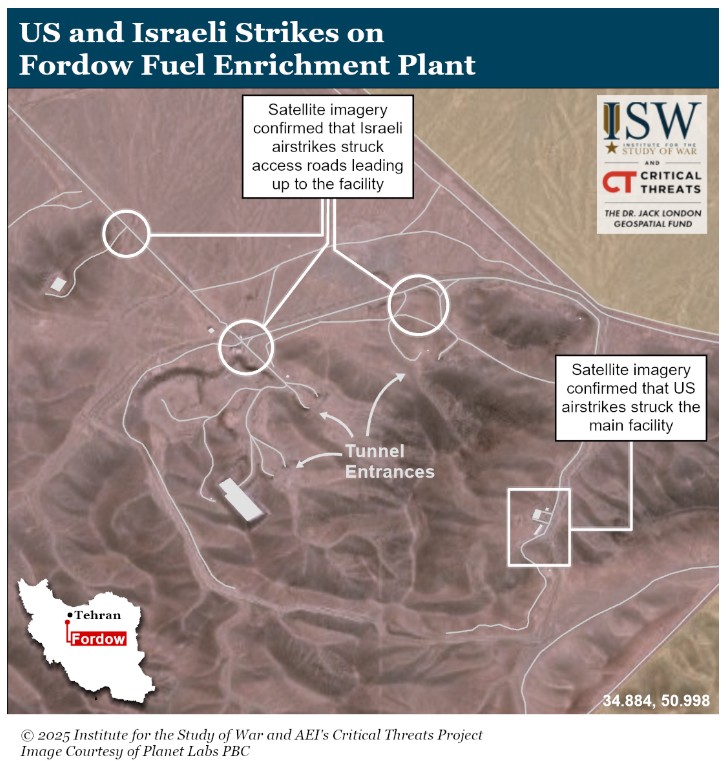
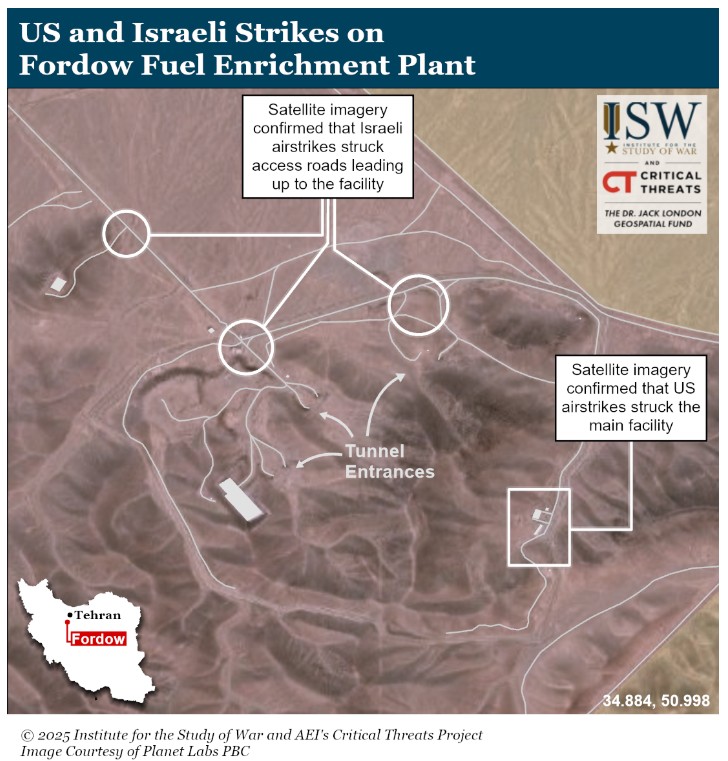
Then, in rapid succession, Iran's pillars collapsed. Russia invaded Ukraine in 2022 and stopped supplying weapons. Iran actually became an arms exporter to Russia instead. In 2023, Hamas launched the October 7 attacks, prompting Israel to effectively destroy the group in Gaza. In 2024, Israel killed Hezbollah's leader Hassan Nasrallah and gutted the organisation, then watched Syria's Assad regime fall entirely. By early 2025, the entire northern arm of the Shia Crescent was gone. Israel could now confront Iran directly, and it did, launching the "12-day war" in 2025, bombing Iran's military and nuclear sites. U.S. B-2 Spirit stealth bombers struck the Fordow nuclear facility with massive bunker-buster bombs, destroying or burying much of the nuclear programme. Trump simultaneously reimposed maximum-pressure sanctions, decimating Iranian oil exports.
By late 2025, Iran was at its weakest in decades: no Russian protection, no proxies, a shattered nuclear programme, and a collapsing economy.
The Spark: Mass Protests and the Massacre (December 2025 – January 2026)
Nationwide protests erupted across Iran in December 2025, spreading from Tehran and Hamadan to virtually every major city. On January 2, Trump publicly backed the protesters. On January 8, the Iranian government cut the internet nationwide for five days. When communications were restored, accounts emerged of a massacre: the IRGC and military had killed an estimated 30,000 people in roughly 48 hours to crush the demonstrations. Trump had considered military action but held back. the USS Abraham Lincoln was still two weeks away, and allies including Israel and Saudi Arabia warned the U.S. wasn't yet ready to absorb Iranian retaliation.
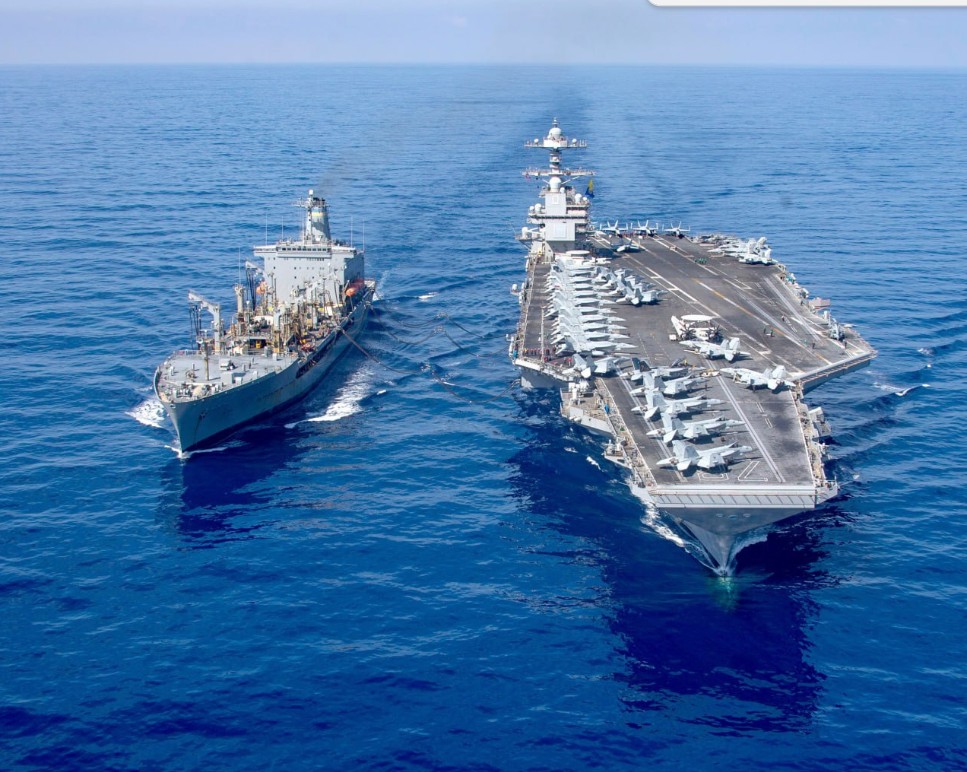
What followed was the largest U.S. military build-up in the Middle East since the 2003 Iraq invasion: two aircraft carrier strike groups (the Abraham Lincoln and the Gerald R. Ford), dozens of F-35, F-16, F-15 and F-22 aircraft deployed to bases in Jordan, Israel, Bahrain and Qatar, nuclear-powered attack submarines, Patriot and THAAD air defence batteries, and full support infrastructure.
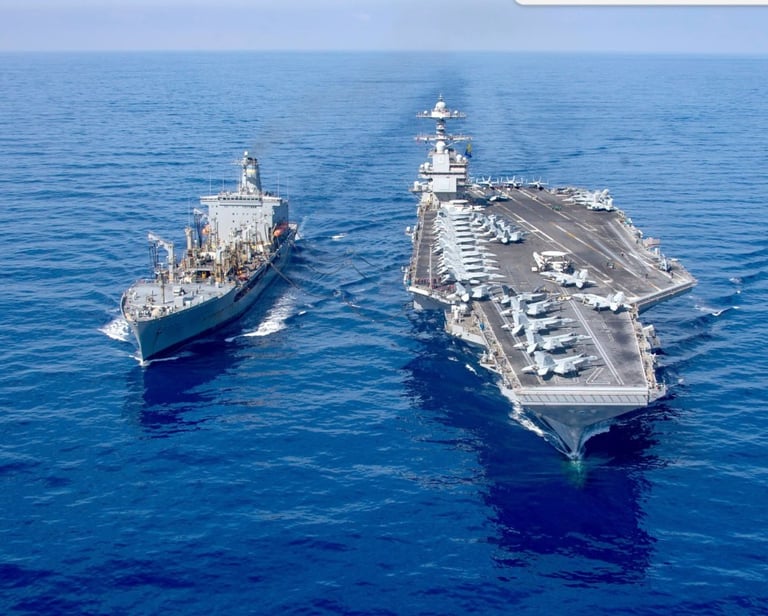
The War Begins: Week 1 (February 28 – March 7, 2026)
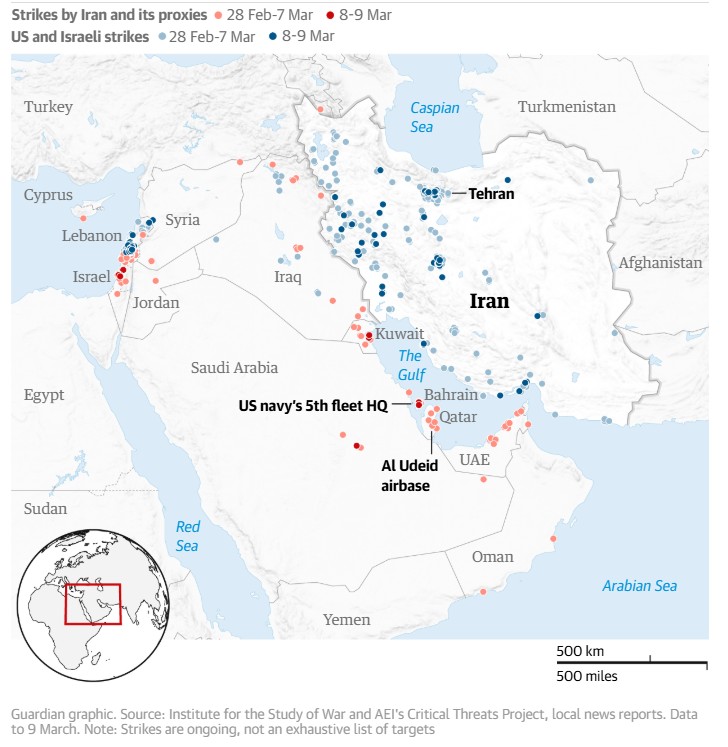
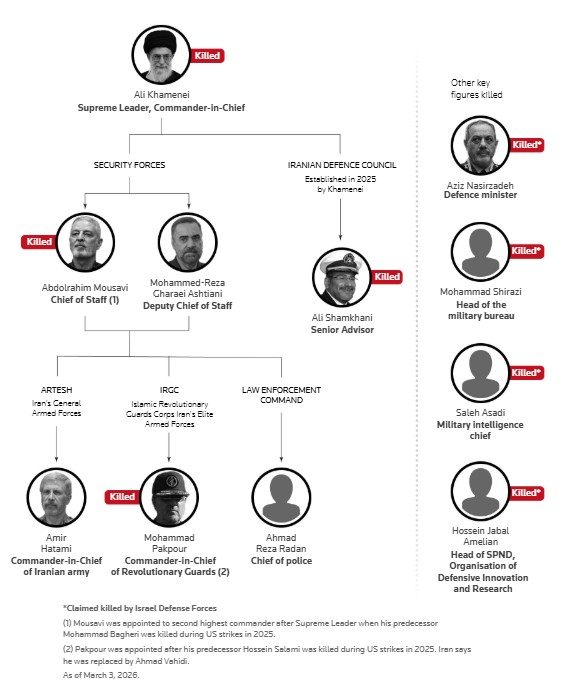
February 28 — The Opening Strike, Operation Roaring Lion and Epic Fury begin at 9:45 a.m. Tehran time, approximately 50 Israeli jets launched dozens of missiles at the Supreme Leader's compound, where Ayatollah Khamenei had surfaced for an emergency meeting with Iran's top military and political leadership. Israeli intelligence had spent years hacking Tehran traffic cameras to track movements on the compound's access street. A CIA mole inside the compound reportedly confirmed Khamenei had left his underground bunker. Phone signals around the compound were jammed simultaneously to prevent any warning. Khamenei was killed, along with his daughter, son-in-law and grandchild. The IRGC commander, the heads of the armed forces, the defence minister and the defence council chief were all killed in the same strikes. Over the following 12 hours, U.S. jets flying from Jordan and the Abraham Lincoln carried out 400 air strikes targeting Iranian missile bases, its air force, and its navy. Israel conducted a further 500 strikes, killing 40 senior commanders within the first minute.
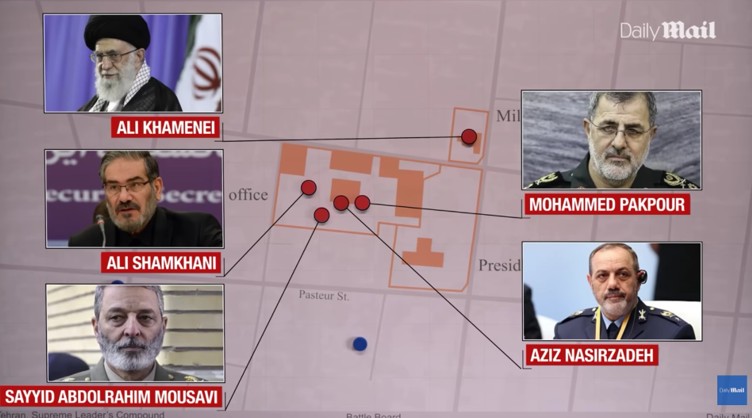
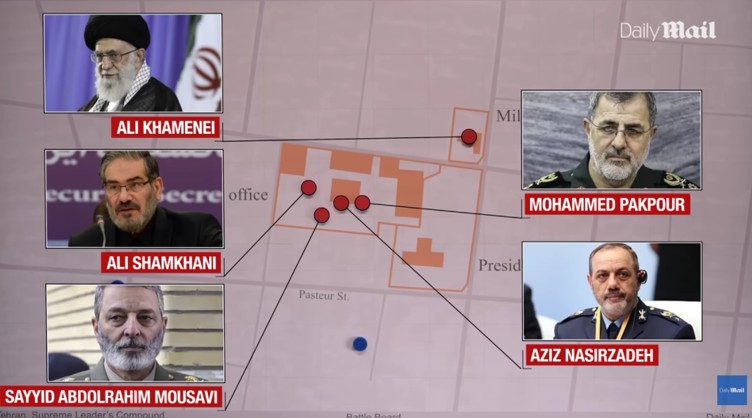
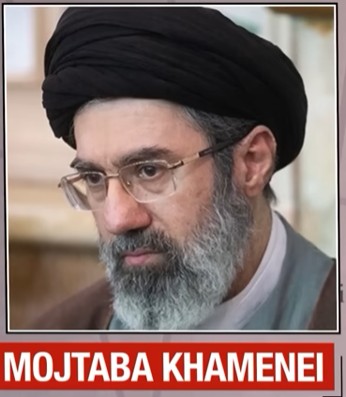
Mojtaba khamenei, one of his four sons, and the heir apparent of the Ayatollah was also present during the attack where he saw his father and most of his family killed. He was reportedly wounded in this strike and we still don't know his state and where he is since the opening strikes began.
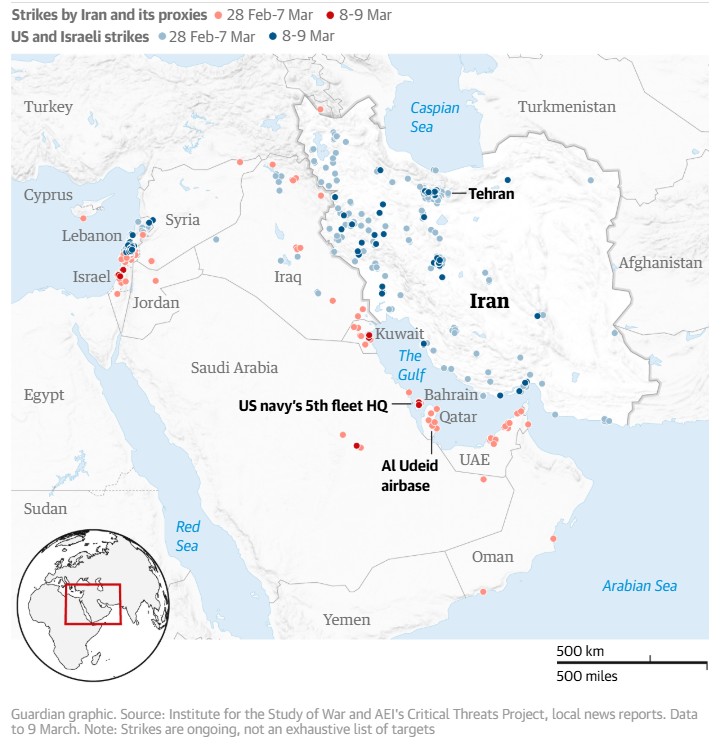
March 1 Iran retaliated across nine countries simultaneously hitting U.S. military bases, Israeli cities, civilian areas in Dubai, and America's Fifth Fleet headquarters in Bahrain. Amazon's AWS data centres in the UAE and Bahrain were struck by drones in the first known military attack on a hyperscaler's infrastructure. Israel and America declared air superiority over the Iranian coastline.
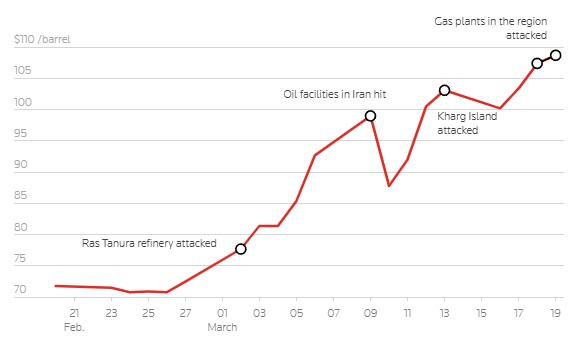
March 3 Israel bombed the Iranian Council of Experts, the 88 senior clerics gathering in Qom to choose Khamenei's successor. The remaining members began meeting only remotely. Brent opens Monday at +13%, around $82/bbl.
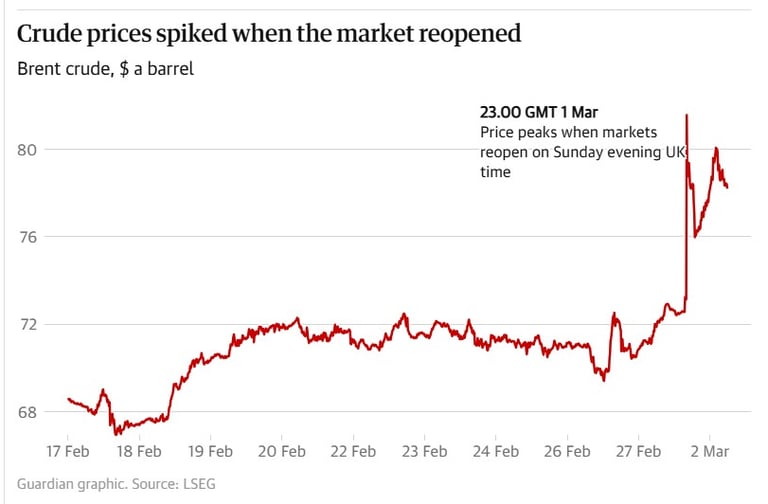
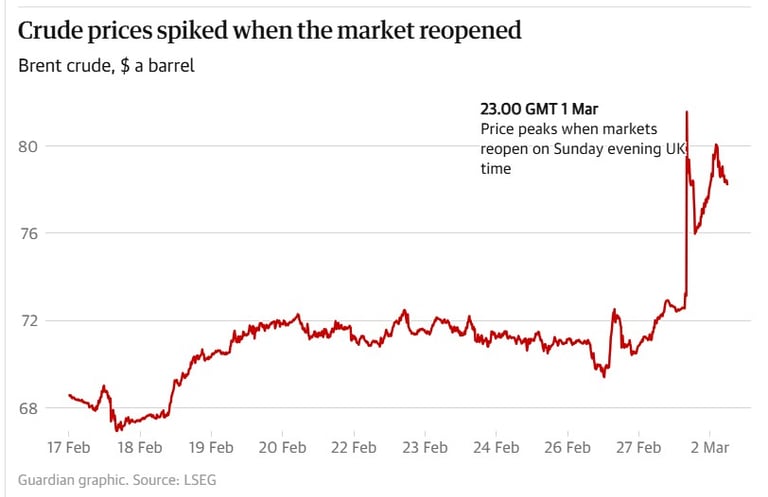
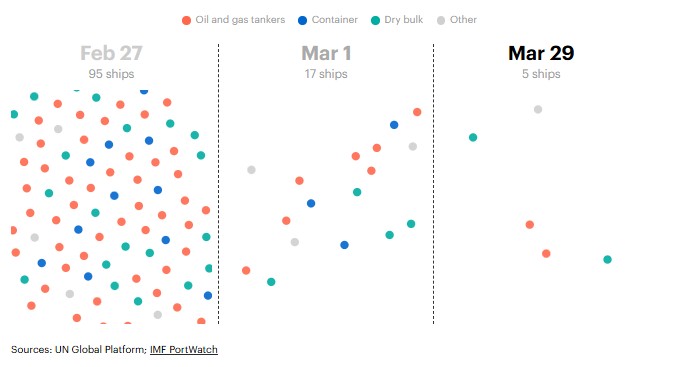
March 4 Iran's strategy shifted from hitting military bases to targeting global energy infrastructure, shooting tankers in the Strait of Hormuz, attacking oil and gas facilities in Qatar and Saudi Arabia. IRGC officially declares Strait of Hormuz 'closed.' All major shipping insurers withdraw war-risk cover. Shipping through the Strait effectively ceased. Ras Tanura, Saudi Arabia's largest refinery, halted operations after a drone strike. Qatar suspended all LNG production. Brent crude crossed $82/barrel.
March 5 The Gerald R. Ford left the Eastern Mediterranean and headed through the Suez Canal toward the Red Sea. The U.S. and Israel announced Phase Two of the campaign: targeting Iranian military factories and production facilities.
March 6 Russia revealed to be sharing intelligence with Iran on U.S. force positions. China was reported to be considering providing intelligence, cash, and missile components. The Gulf states began purchasing cheap interceptor drones from Ukraine. The same drones Ukraine uses against the Iranian Shahed drones Russia fires at them.
March 7 U.S. and Israeli jets began bombing oil facilities around Tehran to cut regime revenue. Israel continued strikes in Lebanon.
Week 2: Escalation and Oil Shock (March 8 – 12, 2026)
March 8 Mojtaba Khamenei, the dead Supreme Leader's son, reportedly wounded in the original strike, was named the new Supreme Leader.
In his first remarks as Iran’s new supreme leader, Mojtaba Khamenei said on Thursday Iran will will avenge the blood of its martyrs and keep the Strait of Hormuz closed.
His precise location remained unknown (Tehran, Mashhad, or Russia depending on the source). The prospect of regime change was fading.
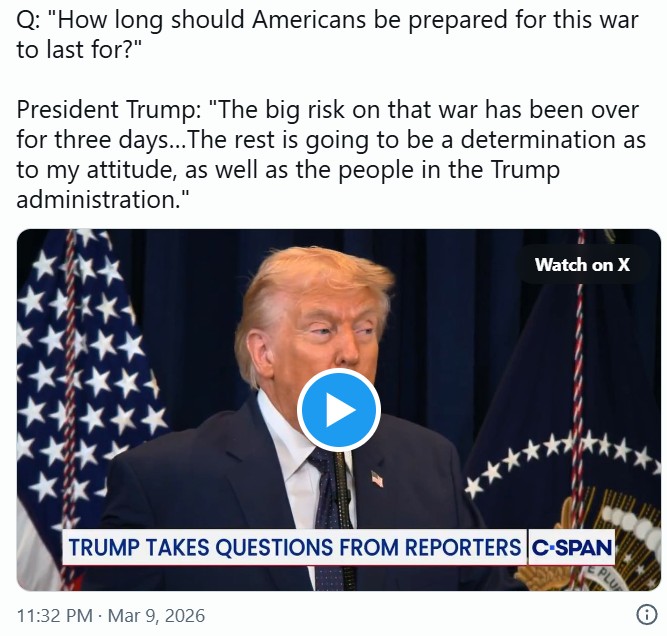
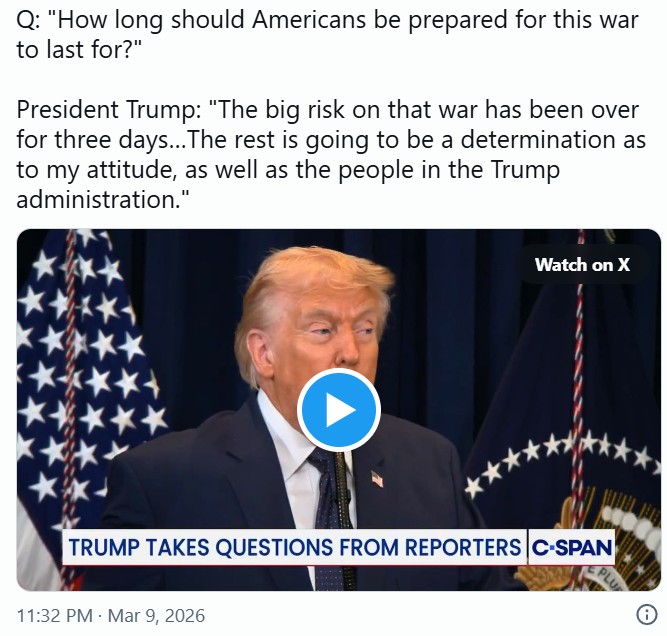
March 9 Oil hit $120/barrel, the highest since the outbreak of the Ukraine war. For the first time, Trump floated the idea of ending the war.
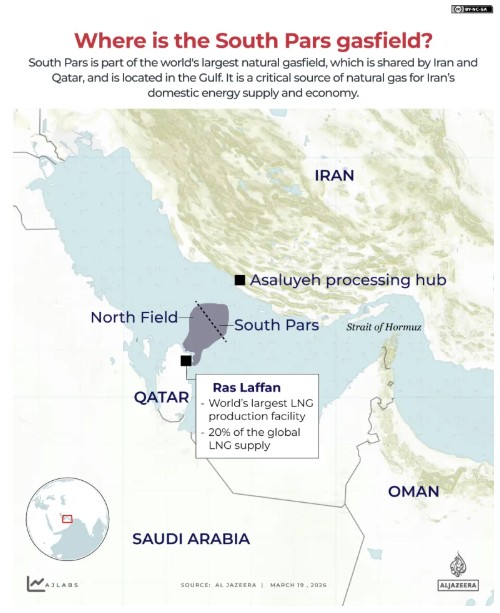
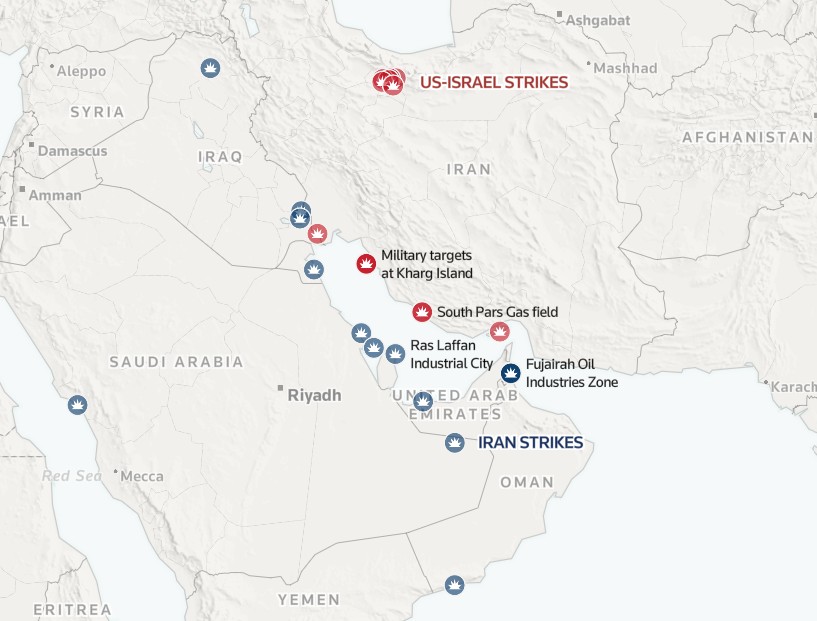
March 2 The Ras Laffan facility in Qatar, which is the largest liquefaction facility in the world, has been offline since it was first attacked on March 2. Regional gas production is also affected by the shut-in of oil fields, which has cut the output of gas associated with oil production.
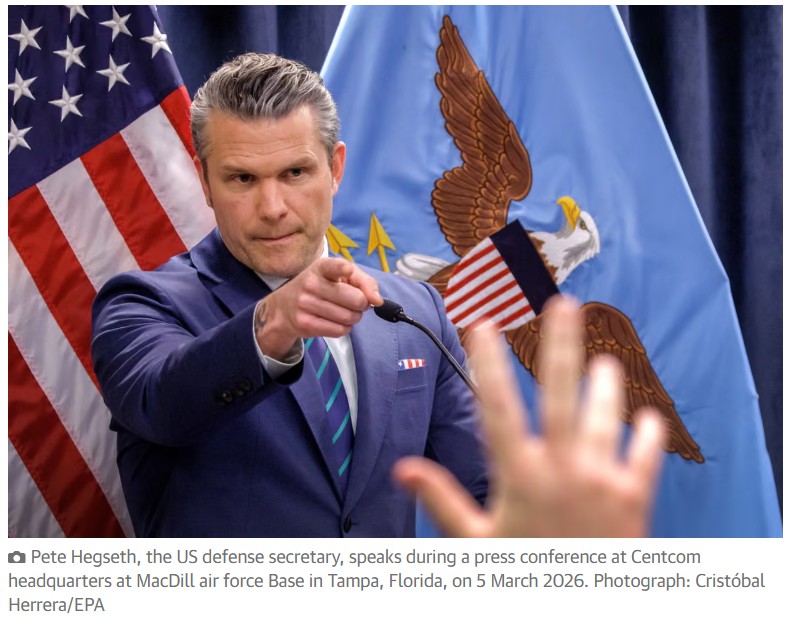
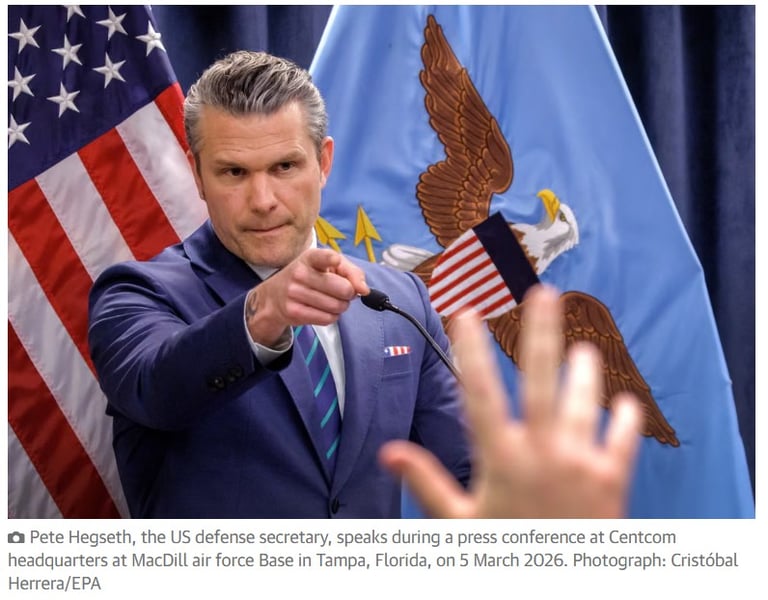
March 10 Defence Secretary Pete Hegseth declared this would be "the most intense day of strikes yet." Iran began laying mines in the Strait of Hormuz; the U.S. struck 16 mine-laying vessels. Israel hit Tehran, Isfahan and Shiraz simultaneously.
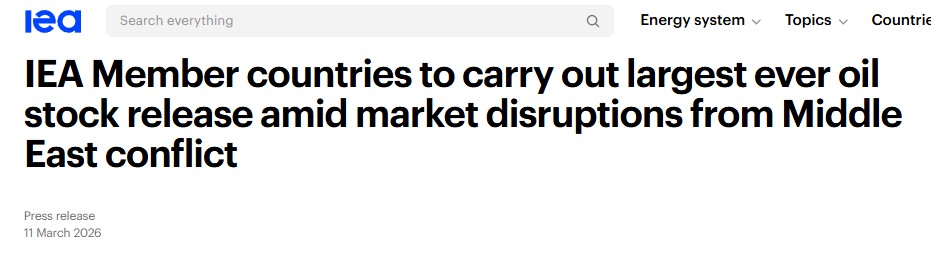
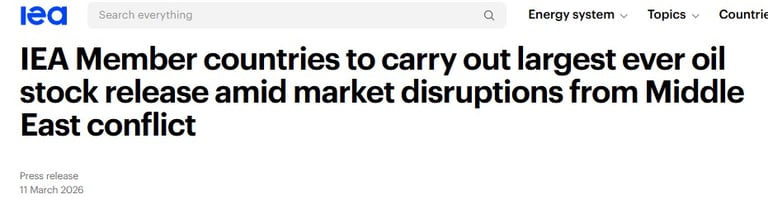
March 11 Iran escalated attacks on tankers in the Strait, hitting a Thai-flagged vessel with an explosive boat drone. Oil prices began spiking again toward $100. The IEA announced the largest emergency oil reserve release in its 50-year history: 400 million barrels.
“The oil market challenges we are facing are unprecedented in scale, therefore I am very glad that IEA Member countries have responded with an emergency collective action of unprecedented size,” said IEA Executive Director Fatih Birol. “Oil markets are global so the response to major disruptions needs to be global too. Energy security is the founding mandate of the IEA, and I am pleased that IEA Members are showing strong solidarity in taking decisive action together.”
Birol calls it the 'greatest global energy security challenge in history.'
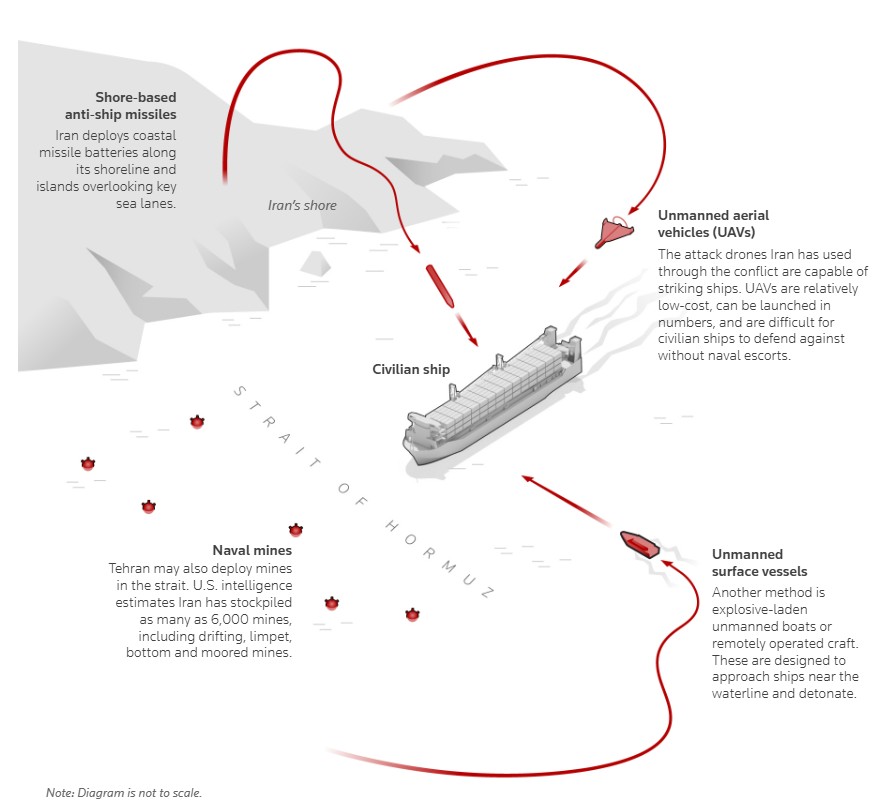
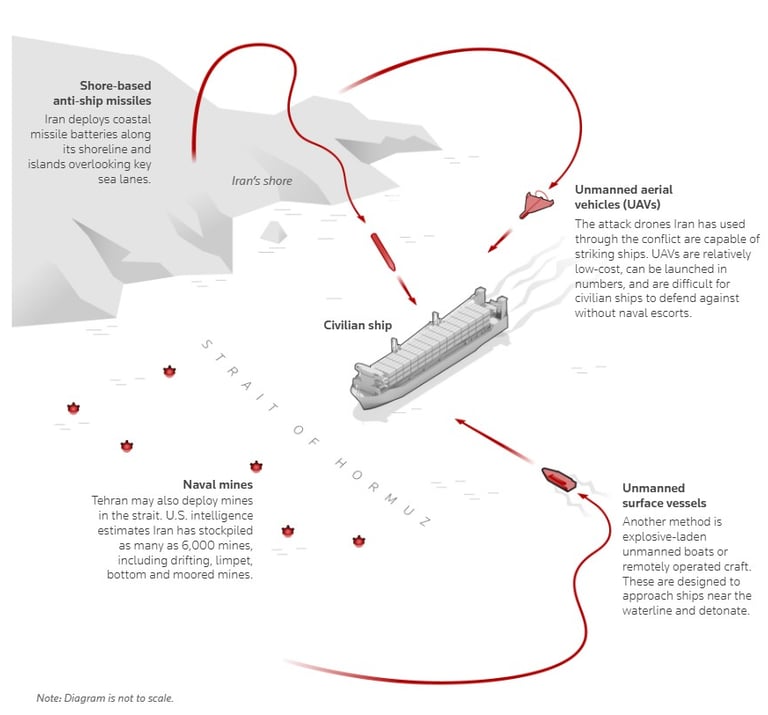
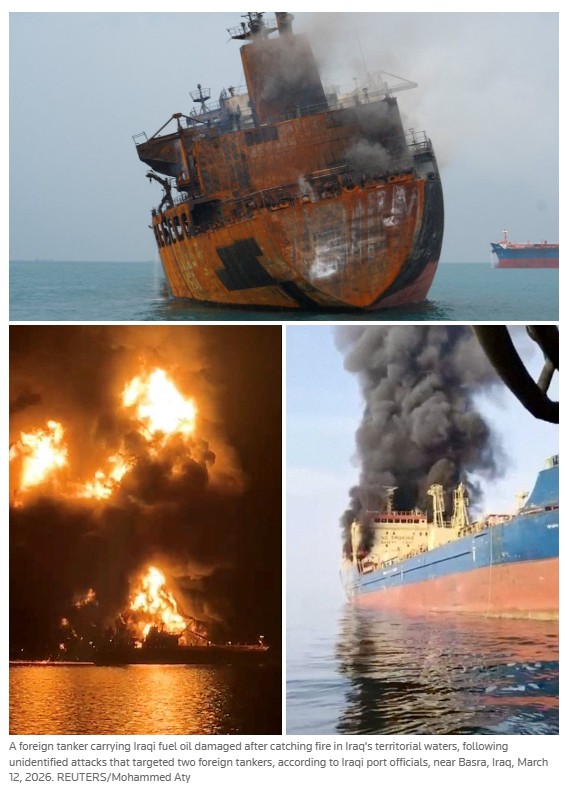
March 12 Iranian drones had attacked six oil tankers in 48 hours. Trump again suggested the war might end soon; Israel said it had no plans to stop. After two weeks of fighting, the U.S. and Israel had achieved near-total air superiority over Iran and destroyed most of its navy, air force, missile sites and defence systems. But the regime remained in power, the Strait stayed closed, and Iran's drone campaign showed no sign of stopping.
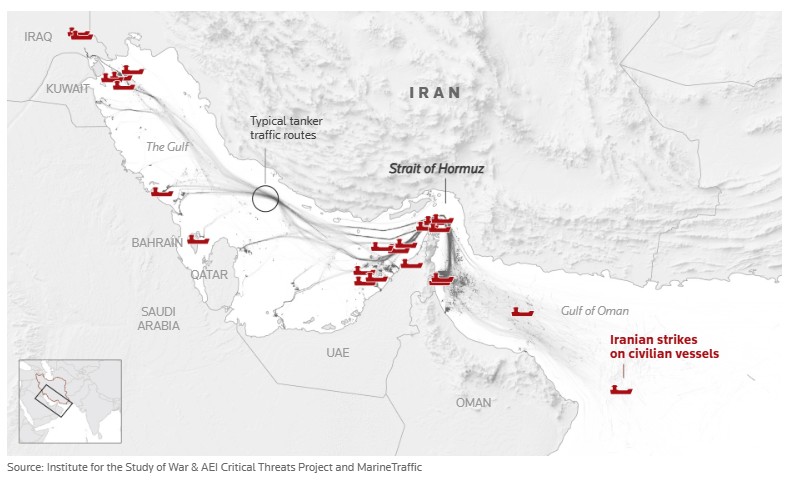
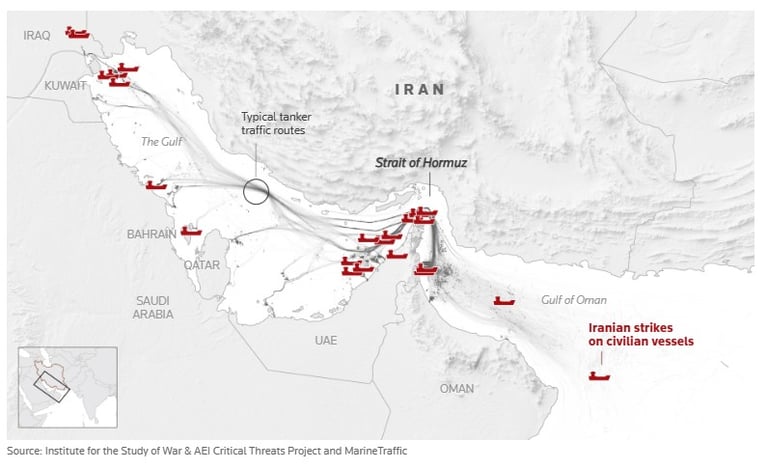
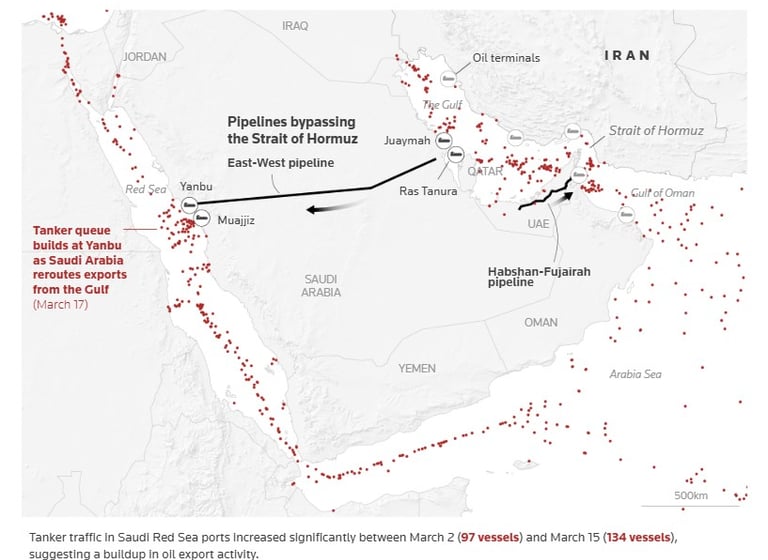
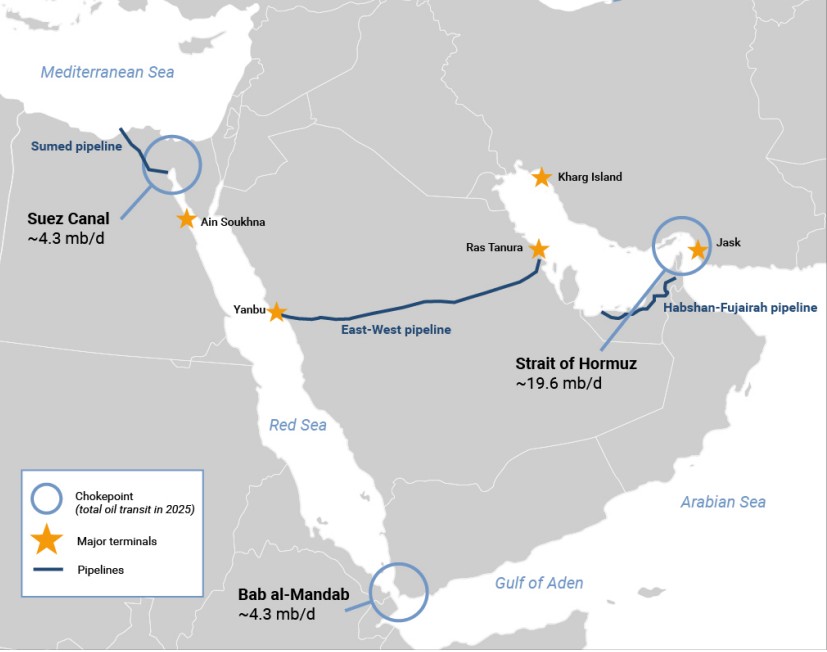
March 17 Iran continues to halt almost all shipping through the Strait of Hormuz, the chokepoint that carries about 20% of global oil and liquefied natural gas supplies. With Hormuz effectively blocked, Gulf exporters are shifting flows to pipelines that bypass the strait.
Shipments through these alternative routes have already started and are steadily ramping up, according to the International Energy Agency (IEA).
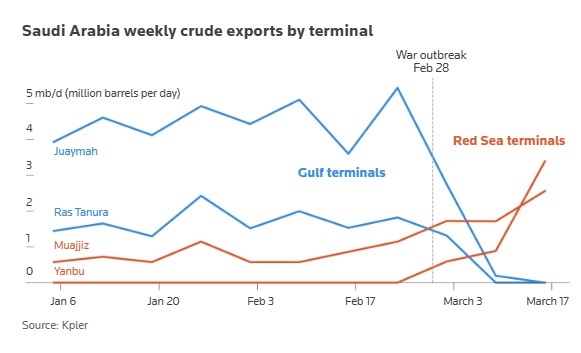
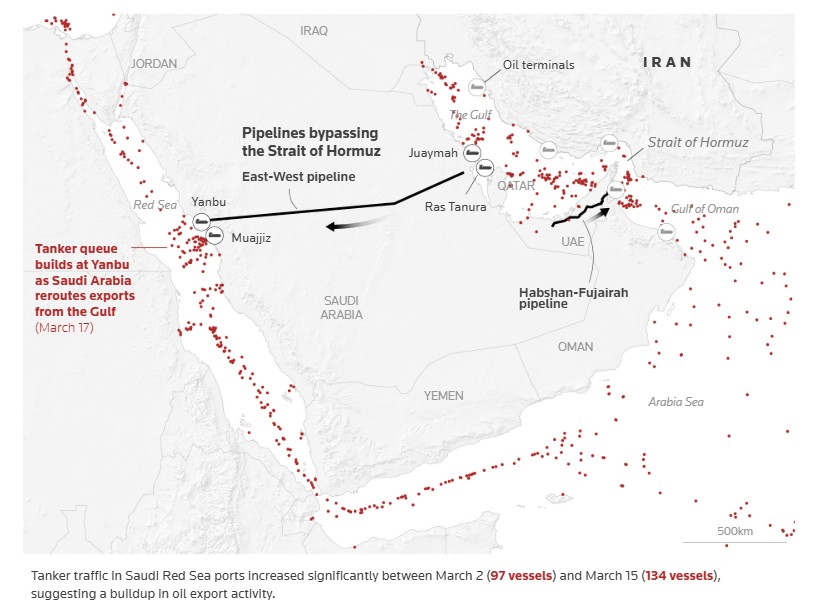
Saudi Arabia is rapidly increasing flows via its East-West pipeline to the Red Sea port of Yanbu, while the UAE is raising exports through the Habshan-Fujairah pipeline, which connects onshore fields to the port of Fujairah on the Gulf of Oman.
Saudi Arabia’s Red Sea pivot is now carrying meaningful volumes. According to the IEA’s March Oil Market Report, flows through the East-West pipeline have surged from an average of 1.7 million barrels per day (mb/d) in 2025 to a record daily export of 5.9 mb/d from its western port of Yanbu on March 9 — with the pipeline expected to reach its full capacity of 7 mb/d within days.
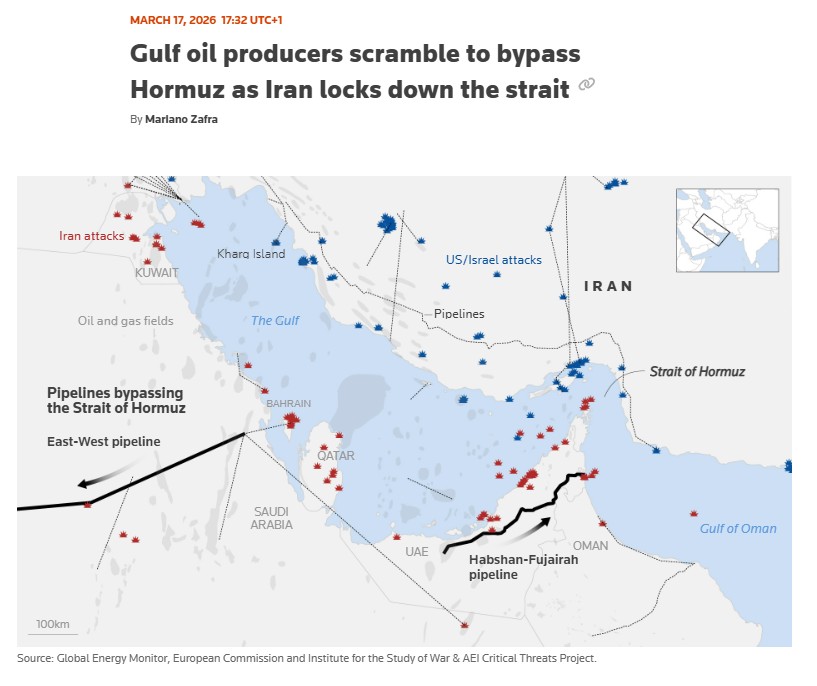
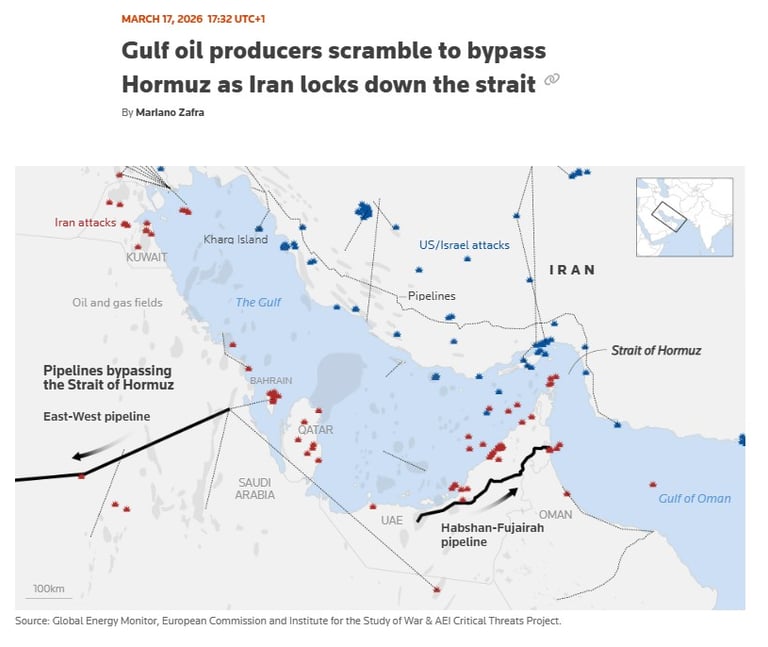
The UAE is making a similar move. The IEA reports that flows through the Habshan-Fujairah pipeline, which connects onshore fields to the port of Fujairah on the Gulf of Oman, averaged 1.8 mb/d between March 1-10 — hitting the line’s reported maximum capacity, up from around 1 mb/d before the crisis.
March 18-19 Israel strikes South Pars, world's biggest gas field. Iran retaliates with ballistic missiles on Qatar's Ras Laffan. 17% of world LNG capacity destroyed. CEO al-Kaabi: "3-5 year repair", $20bn lost revenue.
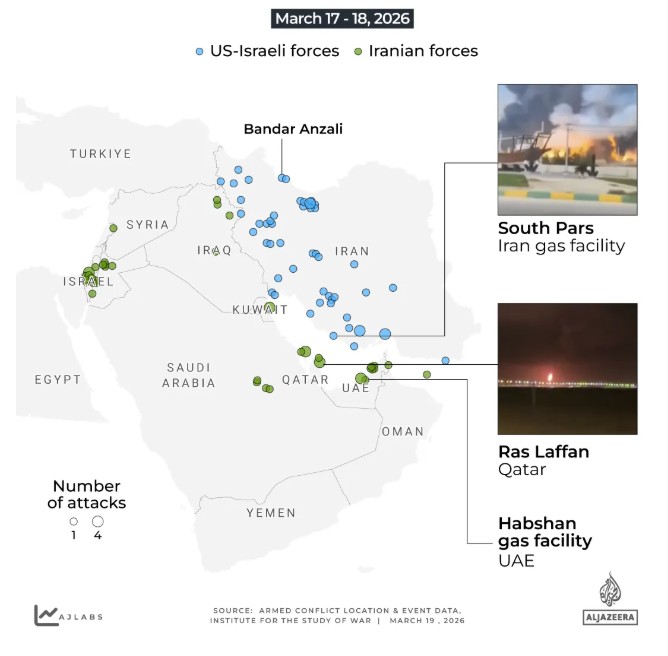
March 20 Multiple key facilities have been damaged or shut down. Drone and missile attacks struck refineries and LNG plants in Saudi Arabia, Kuwait and Qatar, while missile debris forced the shutdown of the UAE’s massive Habshan gas complex and repeated attacks targeted its Fujairah export terminal.
Bahrain declared force majeure after its Sitra refinery was attacked, and Iraq sharply cut output from its southern oilfields despite avoiding direct strikes. Several export hubs were spared direct damage but saw operations halted due to security threats, intercepted missiles or precautionary shutdowns.
Iran’s military said strikes on Iran’s energy infrastructure had led to “a new stage in the war”, in which it had attacked energy facilities linked to the United States. “If strikes (on Iran’s energy facilities) happen again, further attacks on your energy infrastructure and that of your allies will not stop until it is completely destroyed,” Iranian military spokesman Ebrahim Zolfaqari said, according to state media.
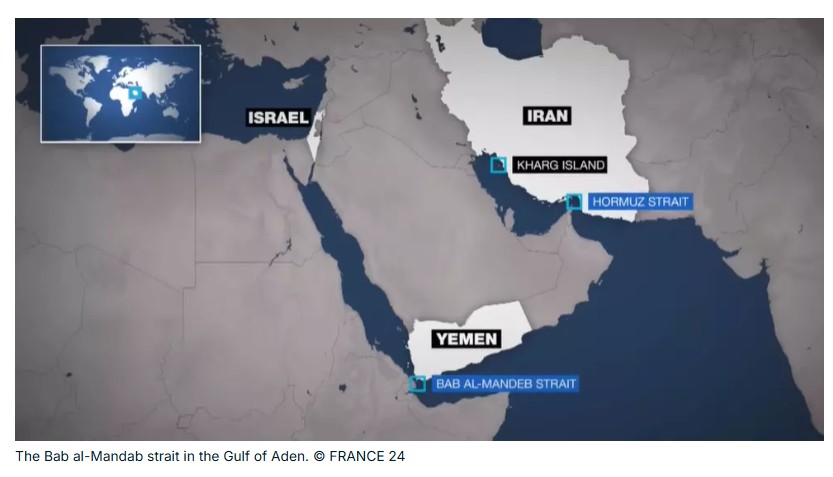
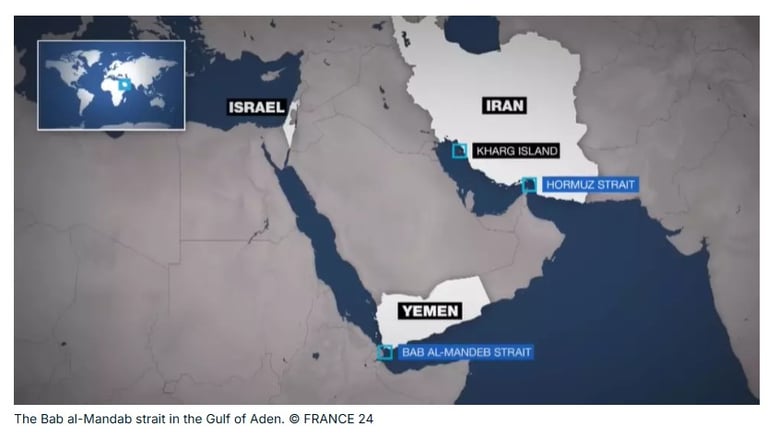
Kuwait's Mina al-Ahmadi (730,000 b/d) struck for 2nd time. Houthis fire missiles at Israel for first time, the conflict widens. And as Iran’s Houthi allies enter the conflict, Iran has threatened to disrupt shipping in the Bab al-Mandab Strait, also known as "the gate of grief" – a strategic waterway linking the Gulf of Aden to the Red Sea and the Suez Canal – with the help of its Houthi allies in Yemen.
While disruptions in the Strait of Hormuz primarily affect Asia, blocking access to the Gulf of Aden could affect European energy supplies and imports from Asia.
"In normal times, around 15 percent of global maritime trade by value goes through it," said Jasper Verschuur, a professor of systems engineering and infrastructure security at Delft University in the Netherlands who has studied the cost of disruptions to strategic maritime routes. The strait also plays a central role in moving oil and gas from the Gulf states to Europe. Tankers leave ports in the Persian Gulf, pass through the Strait of Hormuz, cross the Bab al-Mandab and then travel up the Red Sea to reach Europe via the Suez Canal. The passage at the southern end of the Red Sea is also heavily used by container ships carrying Asian goods destined for European markets, Verschuur said.
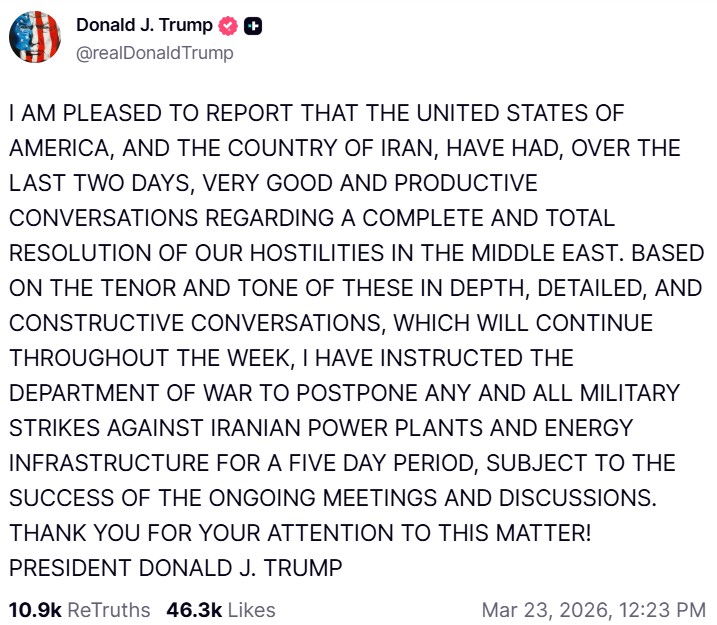
March 23 President Trump postponed US strikes against Iranian powerplants for five days amid "productive" negotiations.
Iran President Masoud Pezeshkian reportedly clashed with IRGC chief-commander Ahmad Vahidi over how the war was being conducted; he also warned that without a ceasefire, Iran's economy could collapse within three to four weeks. He criticized the IRGC's attacks on neighboring countries and called for restoration of executive powers to the civilian government.
Iran denied Trump's claims about productive conversations and its Foreign Ministry stated that there will be no negotiations until Iran's goals have been achieved. Eyewitnesses in Iran described Basij patrols and security checkpoints stationed overnight throughout the country.
IEA Director Birol: "40+ energy assets in 9 countries severely damaged.' Equivalent to 1973 + 1979 + 2022 Ukraine gas crisis combined."
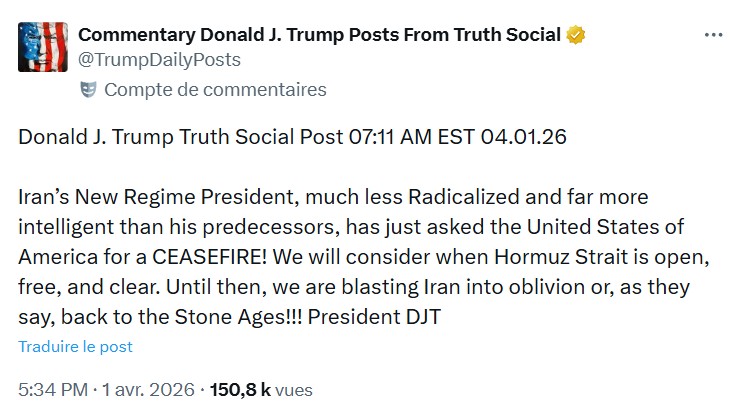
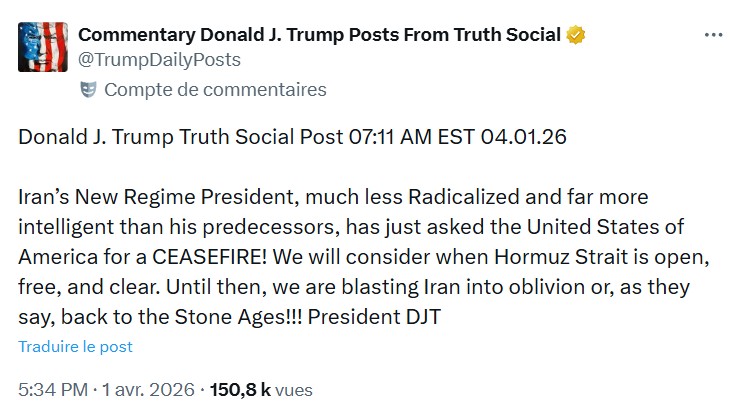
April 1 US President Donald Trump delivered a speech stating the war's objectives were "nearing completion," projecting it could last a few more weeks, and threatening to bomb Iran "back to the stone age" if it did not agree to reopen the Strait of Hormuz and ease disruptions to global energy markets.
IEA Director Birol on Norges Bank podcast: 'April will be TWICE as bad as March — pre-war cargo buffer is now exhausted. In April, there is nothing.' Brent is back above $107.
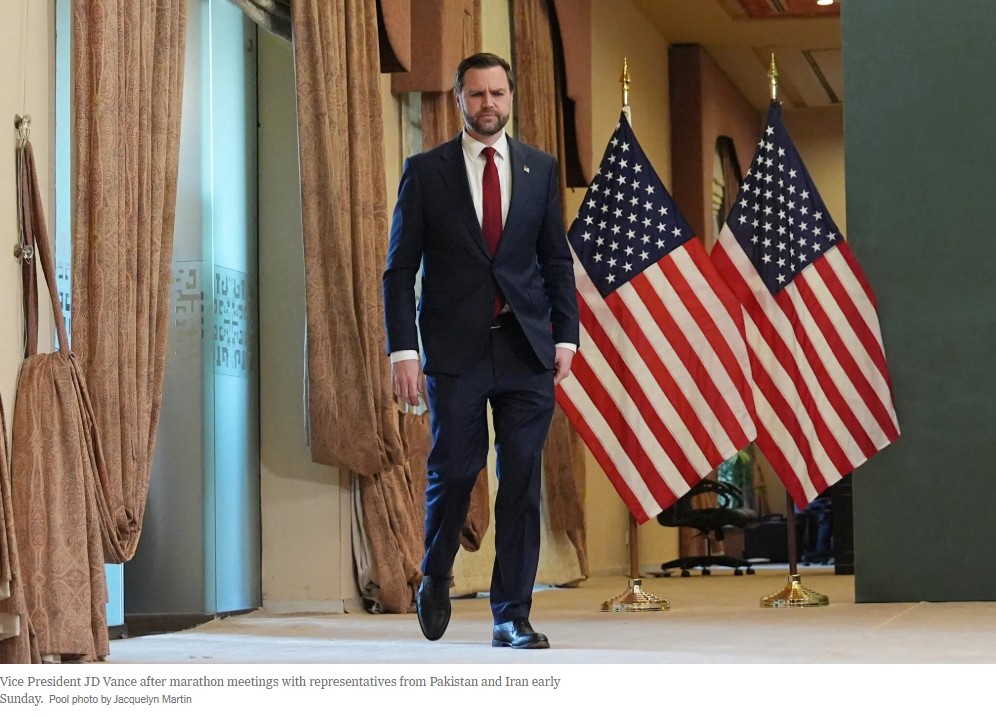
April 12 Early morning, local time in Islamabad, after some 20 hours of negotiations, US Vice President JD Vance stated that Iranian negotiators didn't accept the terms the US representatives JD Vance, Jared Kushner and Steve Witkoff had laid out and that the talks have failed.
April 5 Ali Akbar Velayati, a former Iranian foreign minister and veteran diplomat known for his influence within the establishment, warned on on X that “the unified command of the Resistance front views Bab al-Mandeb as it does Hormuz”. “If the White House dares to repeat its foolish mistakes, it will soon realize that the flow of global energy and trade can be disrupted with a single move,” Velayati wrote.
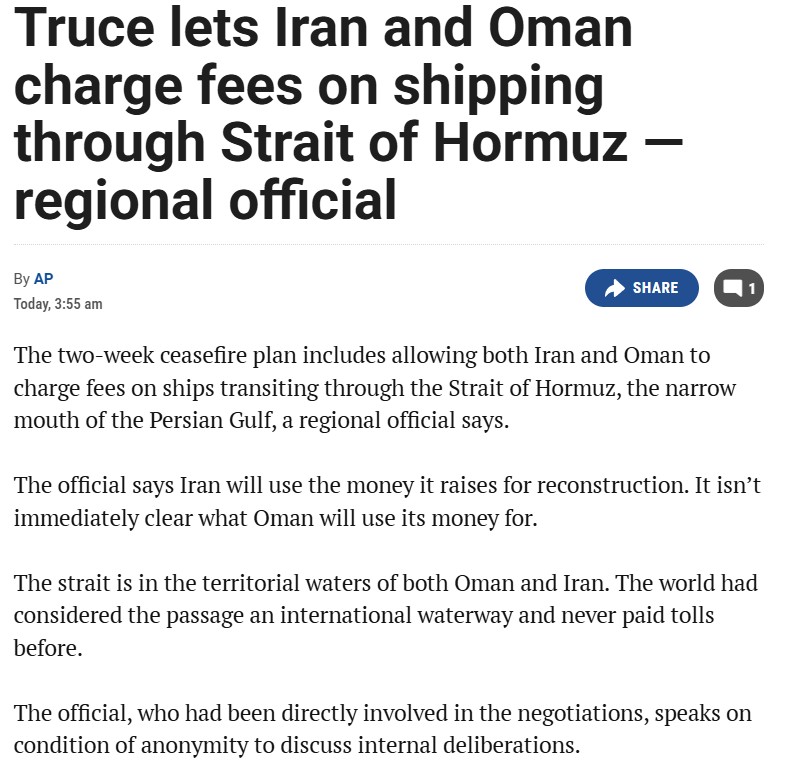
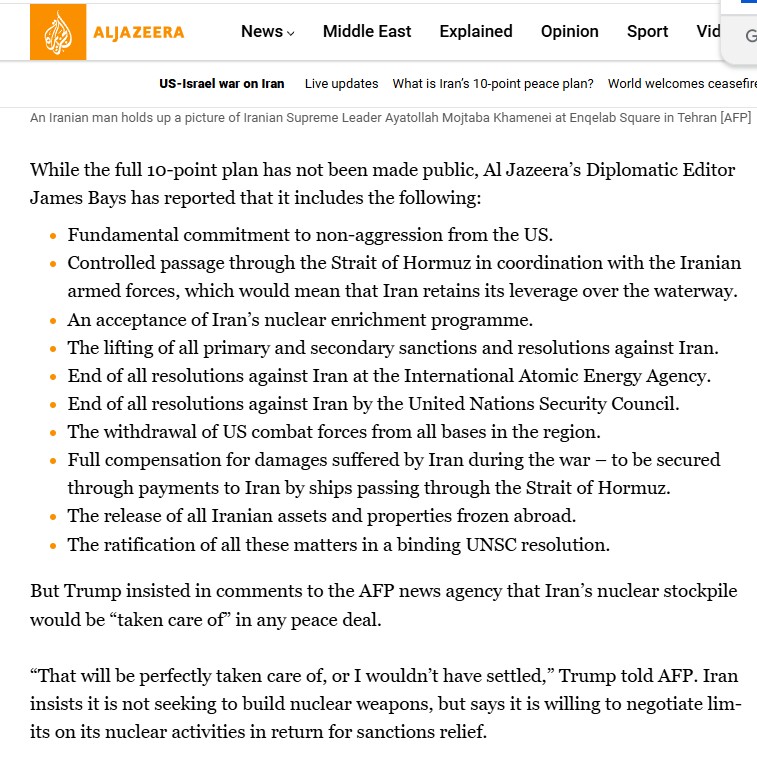
April 8 The United States and Iran have agreed to a two-week ceasefire, reaching a deal less than two hours before President Donald Trump's deadline for Tehran to reopen the Strait of Hormuz or face the wiping out of "a whole civilization". The announcement by Trump late on Tuesday represented an abrupt tumaround from his extraordinary warning earlier, and came after mediation efforts by Pakistan's military chief, Field Marshal Asim Munir, and its Prime Minister Shehbaz Sharif.
But in the ceasefire deal, Iran is allowed to charge fee for passage in the strait of Hormuz:
Furthermore, a pumping station along the 1,200 km pipeline was struck by a drone early morning on Wednesday. Prior to the attack, the pipeline was pumping at its emergency capacity of 7 million barrels per day (bpd) to bypass the shuttered Strait of Hormuz.
The strike occurred just hours after the U.S.-Iran ceasefire announcement, which has so far failed to halt regional hostilities.
The East-West pipeline has been serving as Saudi Arabia's primary remaining export outlet since the war began in late February, with roughly 5 million bpd of crude exported via the Red Sea port of Yanbu.
On his social media platform, Trump declared a naval blockade on the Strait of Hormuz, announcing that the U.S. Navy will prevent ships from entering or exiting the Strait and intercept vessels that have paid tolls to Iran. United States Central Command announced that the blockade will be enforced on vessels of all nations entering or departing Iranian ports and coastal areas but "will not impede freedom of navigation for vessels transiting the Strait of Hormuz to and from non-Iranian ports."
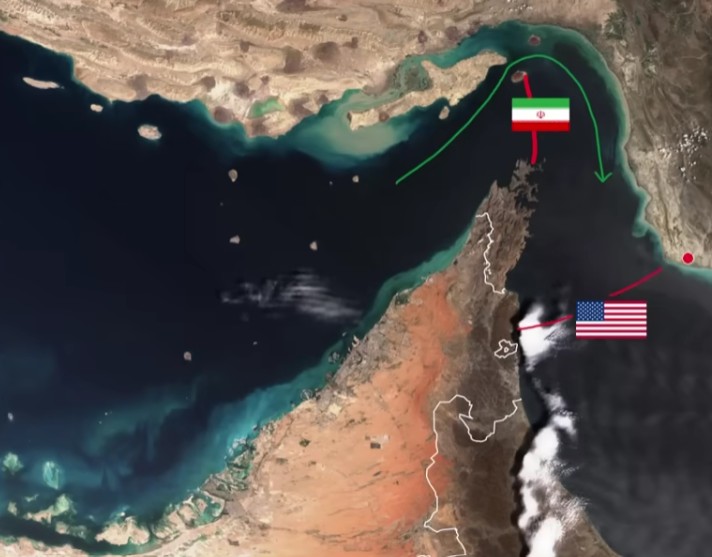
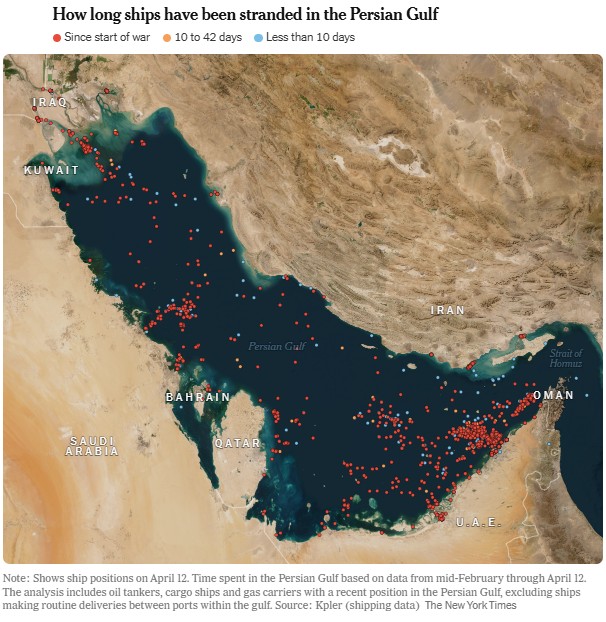
April 18 Just a day after an accord between the US and Iran, with Iranian foreign minister declaring the Strait of Hormuz open for the remainder of the cease-fire. Iran threatens to close the Strait of Hormuz again after Donald Trump said the US would maintain its blockade on Iranian ports.
According to the financial times: "The final ships to clear the strait before the Iran war began on February 28 are expected to reach their destination in Malaysia and Australia by April 20, intensifying the supply shock rippling across Asia.
But with Asian refineries responding by buying up a record number of crude oil cargoes that would normally have sailed to Europe and the US, analysts said refiners in some of the world’s wealthiest countries may soon also face shortages."
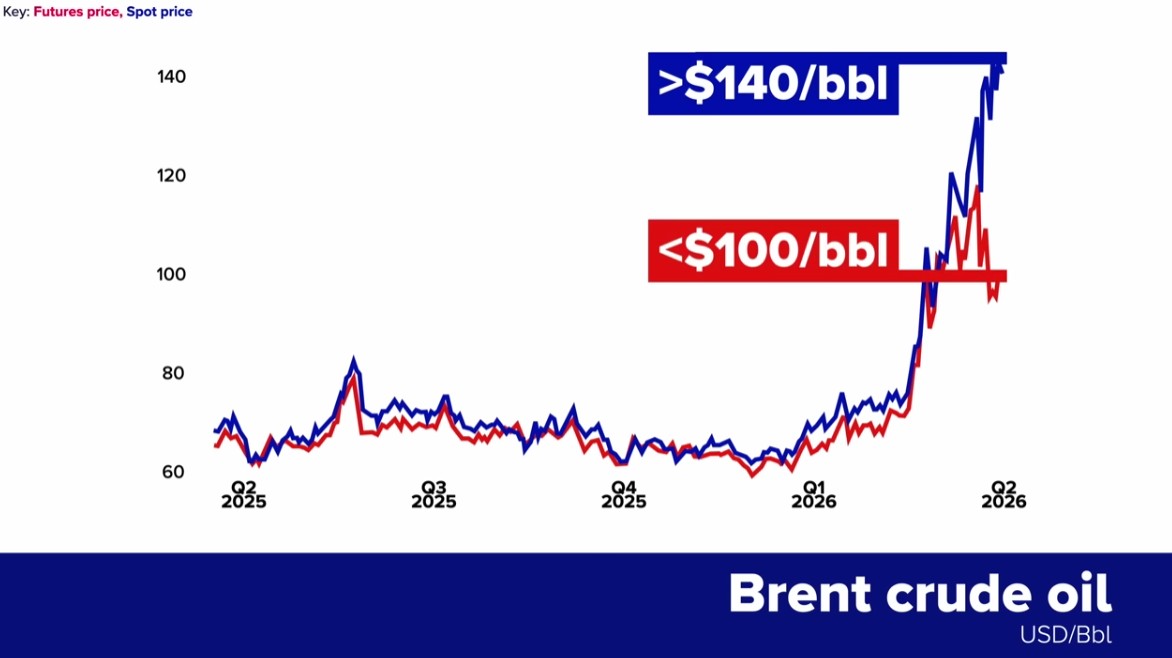
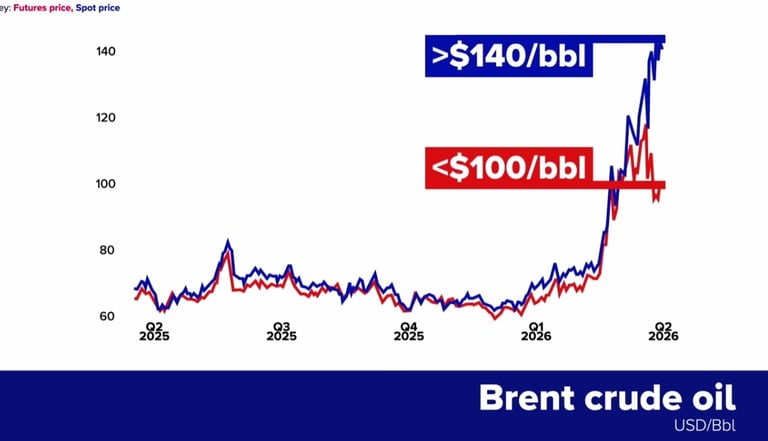
Furthermore, a difference between spot prices and future prices, what people pay to have something right now and something in a month for example, continue to underline that people are still hopefull that the conflict will ease and those expectations are present in current prices :
An overall summarizing of the situation and a Strategic Assessment of the conflict
The U.S. and Israel achieved most of their short-term military objectives with minimal casualties: Iran's ballistic missile stockpiles depleted by an estimated 90%, its navy largely sunk, its air force neutralised, its nuclear sites struck again. But the central objective, regime change has not yet been achieved. A new Supreme Leader is in place, the IRGC is still fighting, though Trump is trying to paint Iran President Masoud Pezeshkian as the head of a new regime he doesn't have the same decision-making power as the Ayatollah in Iran and there are no signs of popular uprising.
The assessment: a tactical victory, but potentially a strategic defeat. Missile factories can be rebuilt. The regime will remain in power. And Iran, now seeing nuclear weapons as the only reliable deterrent against a future strike, is more likely than ever to redouble its efforts to build a nuclear bomb as a deterrent.
If you want to understand the consequence this war has on the world economy, you can see our article on the subject if you click here.
© 2025-2026. All rights reserved.
Centro Research
info@centroresearch.eu
Investment research of securities and markets
Reports and other shared materials should not constitute as financial advice. Investment decisions require individual due diligence and one should seek qualified counsel.