
Weather Forecast
Introduction to weather forecasting and its use in commodity markets
COMMODITIESFORECAST
4/26/20266 min read
Introduction
Weather has an important impact on commodities, it can disrupt the supply chain at many levels. On the production side, droughts or excessive rainfall can damage crops, while hurricanes can disrupt transportation or destroy demand. A cold front can increase demand for heating.
Increased snowfall during winter can affect the water level of the Rhine River. If water levels are too low, barges will not be able to travel between the North Sea and Germany; if water levels are too high, barges may be unable to pass under bridges.
Precise weather tracking is therefore very important, as even small changes can have very different consequences. For example, a hurricane in the Gulf of Mexico can remove supply depending on its path by forcing the closure of offshore oil platforms, which would create an oil shortage. However, with a slightly different trajectory, the hurricane could spare the oil platforms while hitting a densely populated area such as Houston or New Orleans, destroying demand and leading to a decrease in oil prices. Anticipating those weather events are essential for commodities market participant.
How forecasting works
Due to the chaotic nature of the weather, it is very complicated to accurately forecast it, and any error compounds at every step of the forecasting process. Computational power is also expensive, which is why most weather forecast companies are public entities.
Any model starts by gathering live data from weather stations, buoy stations, weather balloons, and weather satellites. These measurements allow the drafting of a worldwide or regional state of the atmosphere, land, and ocean, known as the initial state.
There are regional and global forecast models with differences in accuracy and precision.
There are three main time horizons for weather forecasting: short term (0 to 3 days), medium term (4 to 10 days), and long term (beyond 10 days).
Different type of algorithm
Those algorithm focus on predicting short and medium range forecast
Numerical models: Using initial conditions they use supercomputers to solve set of thermodynamics and fluid dynamics equation governing the atmosphere. Solving those equations is resource intensive.
The two most famous global model using this algorithm are:
GFS published by the National Weather Service (NWS) in the United States,
ECMWF which is The European Center for Medium-Range Weather Forecasts
Ensemble models: Same as the deterministic models but with multiple run. Small changes in the initial parameters of temperature, pressure, humidity, etc., can lead to very different outcomes days later. The initial state is not a complete representation of reality, as observations are sparse and noisy. In ensemble models, multiple simulations are run with slightly different initial conditions. Taking the average of all these simulations tends to reduce the error compared to a single run. NWS and ECMWF are both publishing their own ensemble models.
Probabilistic forecasting (AI models): Those algorithms take a different approach, instead of solving physics equation they use machine learning model trained on past data to find pattern to predict the weather. My analysis and research paper on the topic as the time of writing show improved accuracy compared to ensemble models for up to 6 days forecast. Many AI companies are developing their own model (like google with WeatherNext 2) as well as the weather companies like NWS and ECMWF.
If you’d like to dive into different weather forecast, and weather data in general, I recommend looking into: https://open-meteo.com/en/docs/ecmwf-api
Accuracy analysis
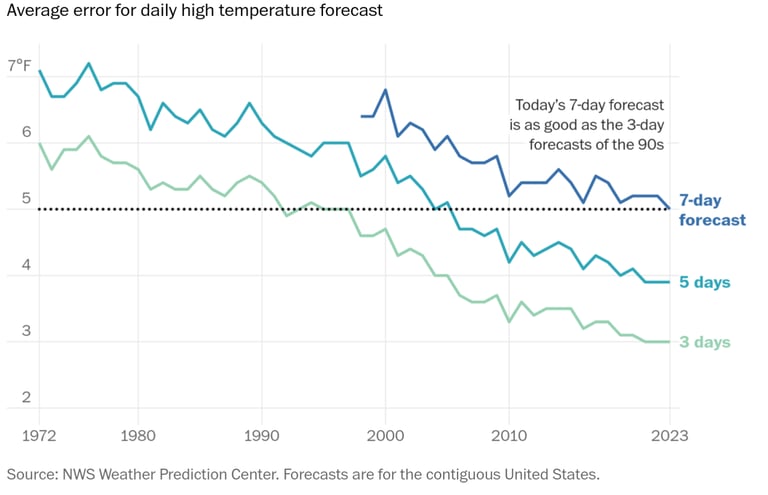
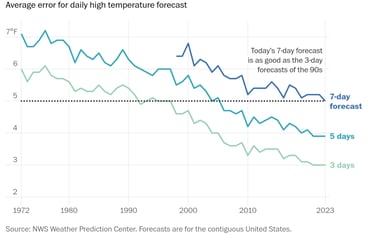
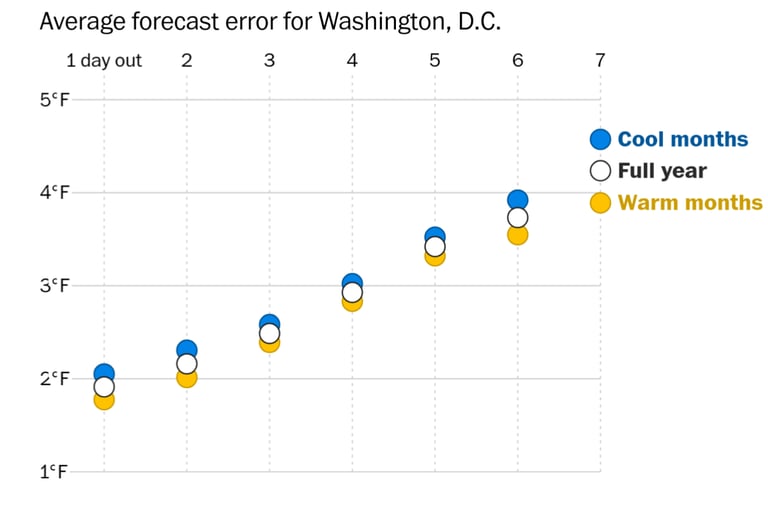
Weather forecast is far from a perfect science. Accuracy depend on the geographical location, type of forecast (humidity, temperature, hurricane...) and the weather pattern (dry vs wet winter, cold spike, near average temperature)
[1]
The increase in forecast accuracy over the years is due to several factors:
Improved data collection and observation systems, including advanced technologies such as weather satellites and radiosondes.
Increased computing power, which allows the use of more sophisticated equations to better represent atmospheric processes.
The development of ensemble models, which reduce errors from initial conditions and provide a better representation of uncertainty and risk.
Advances in computing hardware, enabling faster calculations of more complex numerical models.
The use of machine learning models, which in many scenarios provide improved forecast skill, particularly for short-range forecasts (less than 5 days).
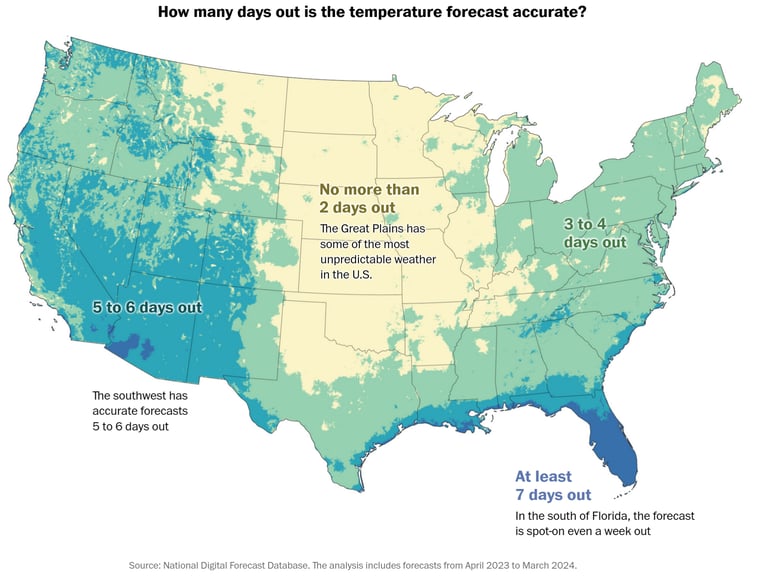
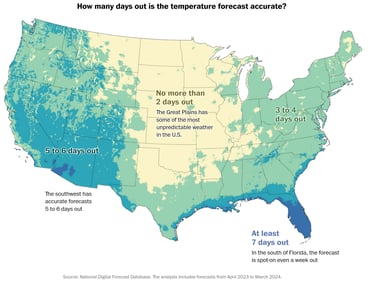
The Washington post did a good analysis on the accuracy of the weather accross geographical locations. They analyzed over a year the accuracy of the weather forecast in the usa.
[1]
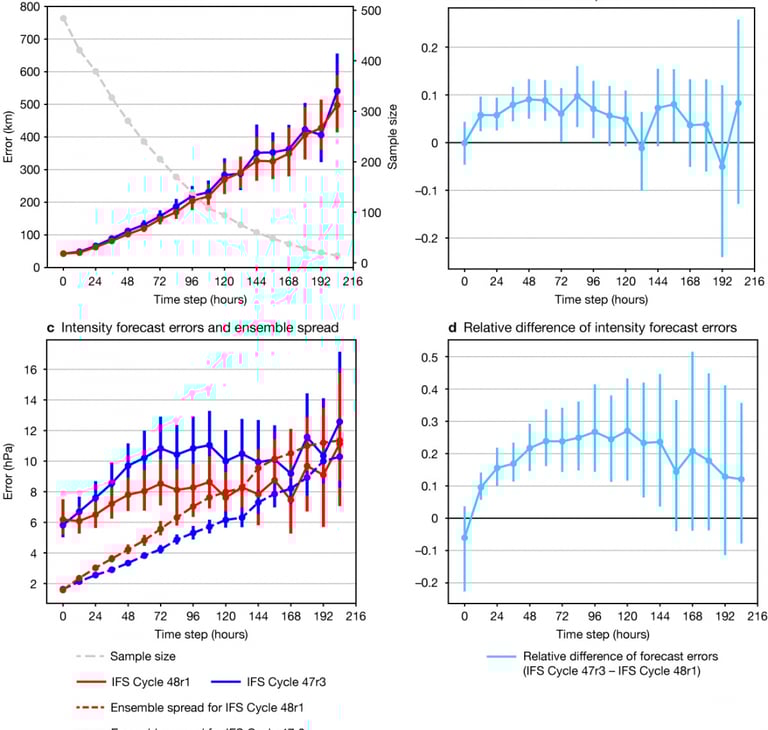
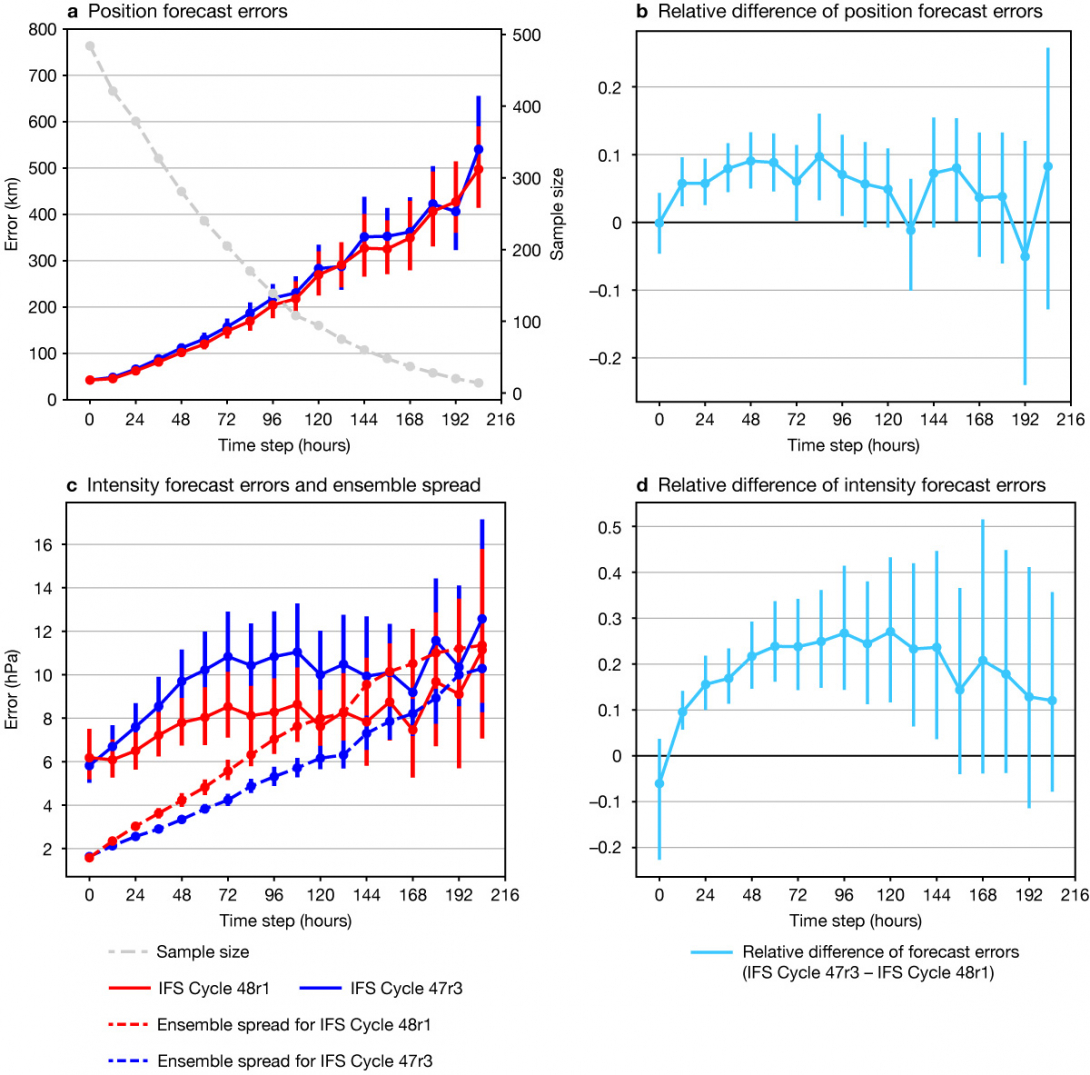
This is the hurricane forecast from ECMWF
[2]
Long term forecast:
Long-term forecasts are currently impossible to predict accurately, but certain cycles and long-term events can provide clues as to whether a future period will be colder, warmer or more/less disrupted than average. Here are some long term event that I found important.
Ocean-Atmosphere Cycle
There are natural fluctuations in interactions between the ocean and the atmosphere. They have irregular patterns but follow a roughly cyclical behavior. Some cycles, such as the El Niño–Southern Oscillation (ENSO), can be predicted 6–12 months in advance [3].
Other oscillations include the Madden–Julian Oscillation (MJO), North Atlantic Oscillation (NAO), Arctic Oscillation (AO), Pacific Decadal Oscillation (PDO), and Interdecadal Pacific Oscillation (IPO).
Their effects can shift heat between the ocean and the atmosphere and can change the global average temperature by approximately 0.1–0.3 °C. They can strongly alter rainfall in certain regions, cause droughts in others, and influence heat waves, cold spells, and storm tracks.
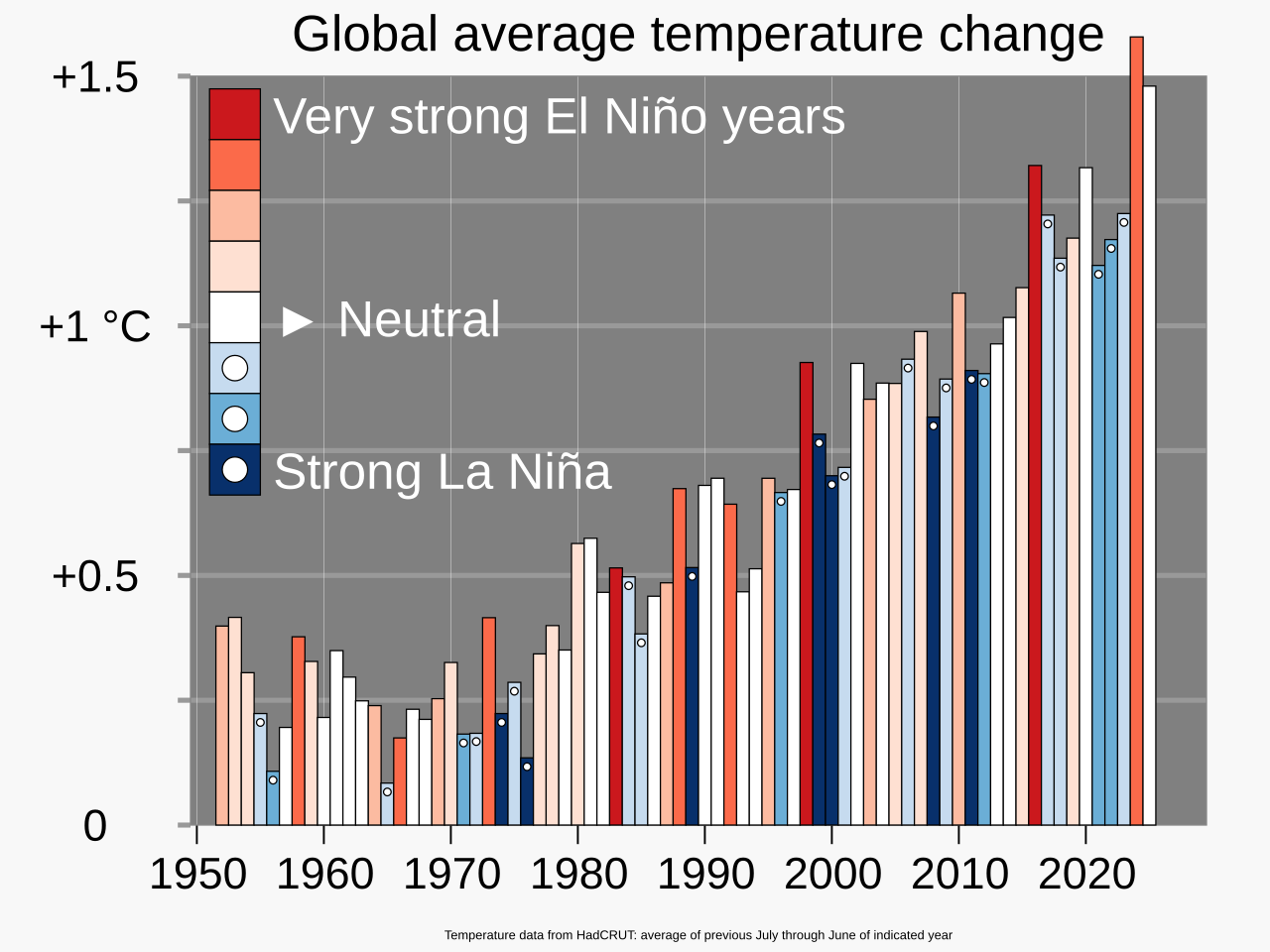
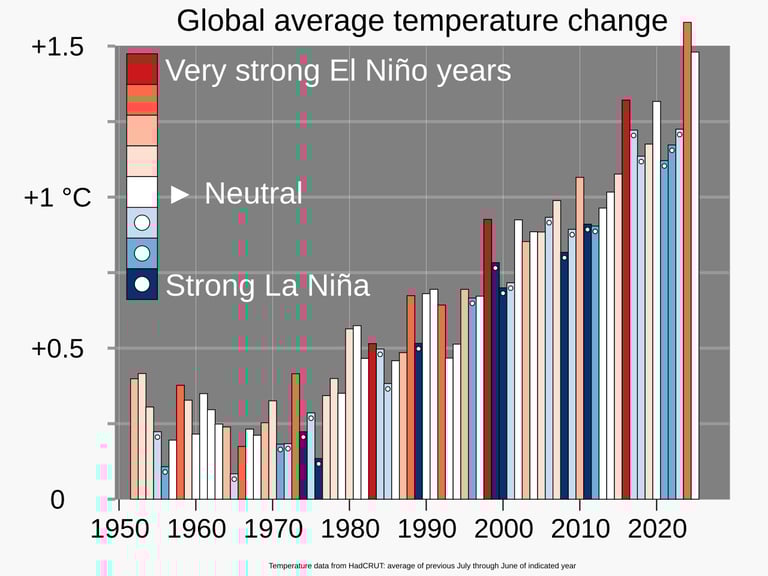
[4]
Volcanic Eruptions
While it is very difficult to predict when an eruption will occur more than a few days in advance, as well as its intensity, eruptions can have long-term repercussions on global temperatures. Large eruptions inject aerosols into the stratosphere, increasing the reflection of solar radiation back to the Sun and lowering surface temperatures on the planet.
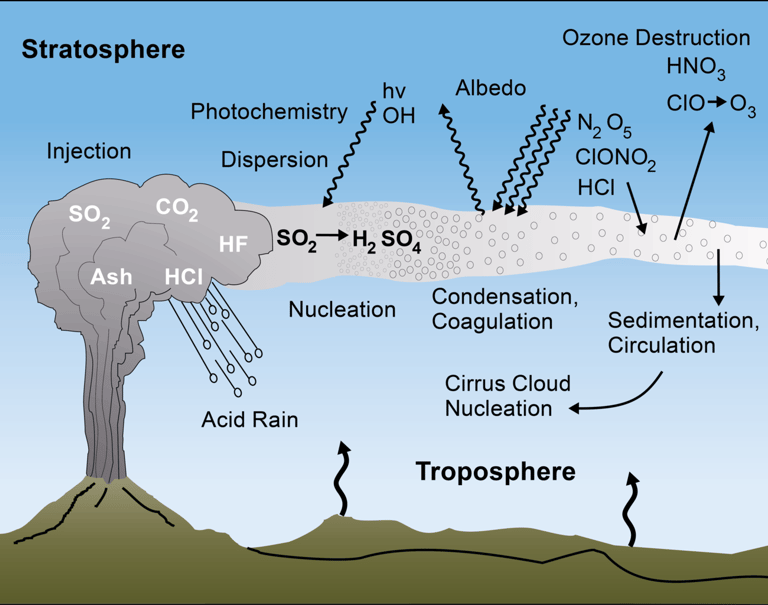
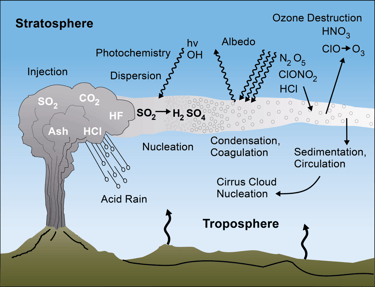
Sources/Usage: Public Domain. View Media Details
It can have 0.3–0.6 °C global cooling with a lasting effect of up to 3 years for the most powerful one.
One of the largest erruption of 20th century Mount Pinatubo on June 15, 1991 and “cooled the Earth's surface for three years following the eruption, by as much as 1.3 degrees F at the height of the impact.” [5]
Key possible volcanoes to erupt: Tambora, Krakatoa, Mount Pinatubo, Toba, Taupo, Katla
Global warming
Smoothing out the weather cycles, it’s clear that there is a high positive correlation between carbon dioxide and average temperature.
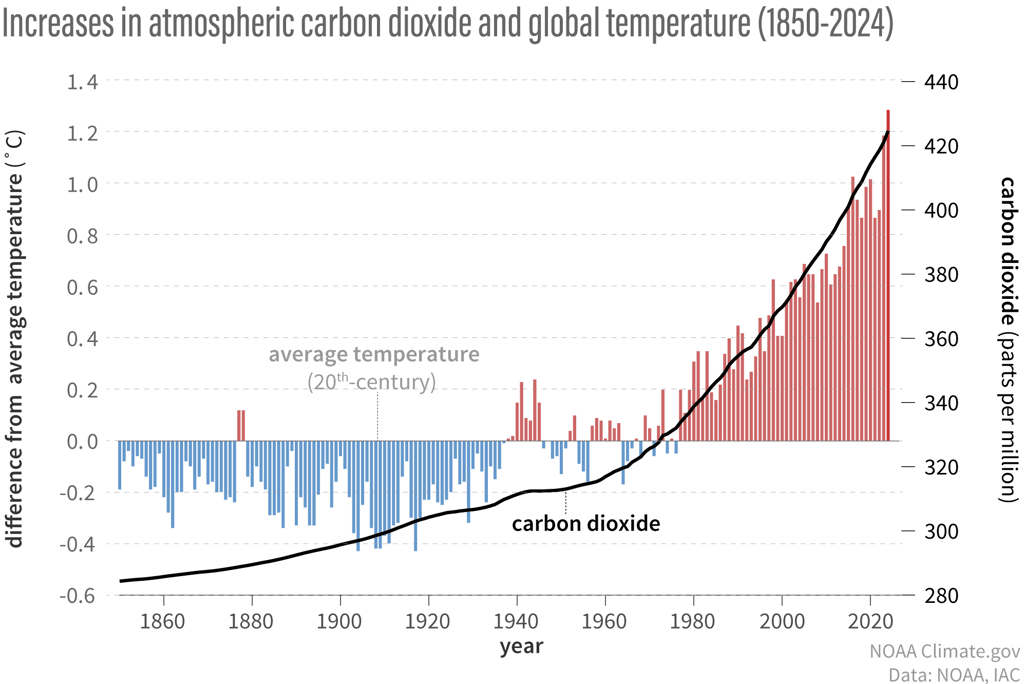
[6]
I know that correlation is not causation, I’ve heard some arguments that global warming is due to the sun’s cycle and not co2 emission, looking at the following graph it is clear that solar variation has a very minimal impact on the global average temperature. Solar radiation explain in no way how the surface temperature is getting warmer.
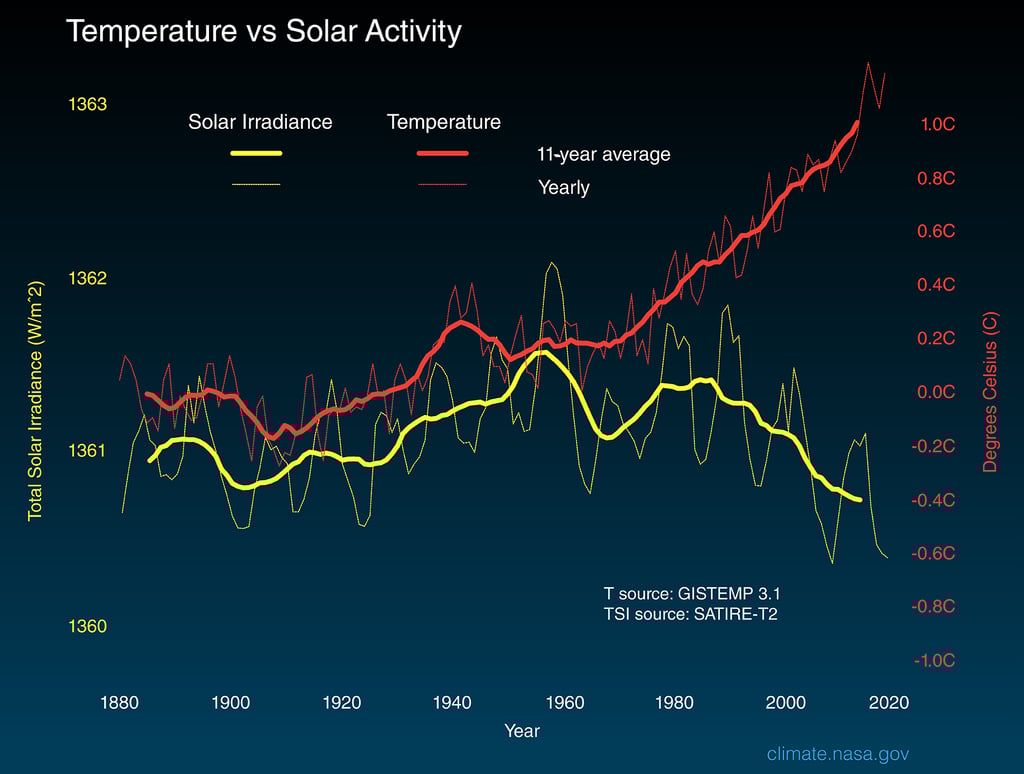
[7]
References
[1]“How accurate is the weather forecast,” Washingtonpost. [Online]. Available: https://www.washingtonpost.com/climate-environment/interactive/2024/how-accurate-is-the-weather-forecast/
[2]“ecmwf - Huricane forecast.” [Online]. Available: https://www.ecmwf.int/sites/default/files/styles/wide/public/2023-07/NL-176-M2-Lang-Figure-6.jpg?itok=VsuPe-sY&24522
[3]“El nino,” NSR. [Online]. Available: https://academic.oup.com/nsr/article/5/6/826/5123734?login=false
[4]“climatic cyles,” Wikipedia. [Online]. Available: https://commons.wikimedia.org/w/index.php?curid=109388602
[5]“Volcanoes can affect climate.” [Online]. Available: https://www.usgs.gov/programs/VHP/volcanoes-can-affect-climate
[6]Rebecca Lindsey, “carbon-dioxide-hits-new-high-every-year,” NOAA. [Online]. Available: https://www.climate.gov/news-features/climate-qa/if-carbon-dioxide-hits-new-high-every-year-why-isn%E2%80%99t-every-year-hotter-last
[7]“temperature vs solar activity.” [Online]. Available: https://science.nasa.gov/resource/graphic-temperature-vs-solar-activity/
© 2025-2026. All rights reserved.
Centro Research
info@centroresearch.eu
Investment research of securities and markets
Reports and other shared materials should not constitute as financial advice. Investment decisions require individual due diligence and one should seek qualified counsel.